Touch and changeToca y cambia
Move, type, tap, or drag in the model. Watch what changes.Mueve, escribe, toca o arrastra en el modelo. Observa qué cambia.
Unit 10 · Math Is...Unidad 10 · Las matemáticas son...
TicketBoleto
A bike shop ticket lists two gears. The pedal gear has 48 teeth. The back wheel gear has 32 teeth. You pedal around one time. How many times does the back wheel spin?Una orden de un taller de bicicletas anota dos engranajes. El engranaje del pedal tiene 48 dientes. El de la rueda trasera tiene 32 dientes. Pedaleas una vuelta completa. ¿Cuántas vueltas da la rueda trasera?
Five short steps, about 15–20 minutes: watch the idea, try one together, solve 10 in three levels, check, celebrate.Cinco pasos cortos, unos 15–20 minutos: miren la idea, prueben uno juntos, resuelvan 10 en tres niveles, revisen y celebren.
Optional. No grades, no account. Your place is saved on this device.Opcional. Sin calificaciones ni cuenta. Su avance se guarda en este dispositivo.
Tonight's ideaLa idea de hoy Use ratios and models to explain a clever fix for a real problem.Usar razones y modelos para explicar una solución ingeniosa a un problema real.
💡 Draw fraction bars, tape diagrams, equations, or line up decimals together!💡 ¡Dibujen barras de fracciones, modelos o alineen decimales juntos!
Step 1 of 5Paso 1 de 5
Read the goal and look at the picture. Then go through the example one step at a time.Lean la meta y miren el dibujo. Luego sigan el ejemplo un paso a la vez.
Use ratios and models to explain a clever fix for a real problem.
Usar razones y modelos para explicar una solución ingeniosa a un problema real.
The example:El ejemplo: A later bicycle design uses a chain: the pedal gear has 48 teeth, and the largest rear gear has 32 teeth.Un diseño posterior de bicicleta usa una cadena: el engranaje del pedal tiene 48 dientes, y el engranaje trasero más grande tiene 32 dientes.
Your case:Su caso: Tonight we use ratios to explain how bicycle gears work — why one turn of the pedals can spin the wheel more than once.Esta noche usamos razones para explicar cómo funcionan los engranajes de una bicicleta: por qué una vuelta de los pedales puede girar la rueda más de una vez.
Tap a clue to read what it means.Toquen una pista para leer qué significa.
Look at the picture and the story. Say it out loud, or type a few words. There is no wrong answer here.Mira el dibujo y la historia. Dilo en voz alta o escribe unas palabras. Aquí no hay respuestas incorrectas.
Just for you. It stays on this device. We ask again at the end.Solo para ti. Se queda en este dispositivo. Preguntamos otra vez al final.
Step 2 of 5Paso 2 de 5
Do this one side by side. Use the model, and ask for a hint whenever you want one.Háganlo lado a lado. Usen el modelo y pidan una pista cuando quieran.
Try this one togetherPrueben este juntos
A bike has a 44-tooth pedal gear and a 22-tooth rear gear.Una bicicleta tiene un engranaje de pedal de 44 dientes y uno trasero de 22.
Write the gear ratio.Escriban la razón de engranajes.
44 : 2244 : 22
Pedal teeth first, wheel teeth second.Primero los dientes del pedal, luego los de la rueda.
Simplify it.Simplifíquenla.
Divide both by 22: 2 : 1.Dividan ambos entre 22: 2 : 1.
Divide both numbers by the same amount.Dividan los dos números entre la misma cantidad.
Say what it means for riding.Digan qué significa al andar en bicicleta.
The wheel turns twice for every one pedal turn.La rueda gira dos veces por cada vuelta del pedal.
More wheel turns per pedal turn means more speed.Más vueltas de rueda por pedaleo significa más velocidad.
Change the starting pair. Multiply both quantities by the same number to keep the ratio equivalent.Cambia el par inicial. Multiplica ambas cantidades por el mismo número para conservar la razón.
🌐 Esta herramienta interactiva por ahora solo está en inglés. Para qué sirve: Amplía y reduce una razón en una tabla para que aparezca toda una familia de razones equivalentes a partir de un solo par. Usen los pasos en español de esta tarjeta para guiarse.
Move, type, tap, or drag in the model. Watch what changes.Mueve, escribe, toca o arrastra en el modelo. Observa qué cambia.
Record one equation, value, or relationship you can see.Escribe una ecuación, un valor o una relación que puedas ver.
I notice ___ changes when ___ changes. This shows ___.Noto que ___ cambia cuando ___ cambia. Esto muestra ___.
Ask: "Where do you see the numbers from tonight's math in this model?"Pregunta: "¿Dónde ves los números de la tarea de hoy en este modelo?"
Scale both parts together to model tonight's equivalent-ratio work.Escalen ambas partes juntas para modelar las razones equivalentes de hoy.
Use Ratio Tape to create one example together before solving the practice problems.Usen Cinta de razones para crear un ejemplo juntos antes de resolver los problemas.
Use ratios and models to explain a clever fix for a real problem.
Usar razones y modelos para explicar una solución ingeniosa a un problema real.
A gear ratio compares teeth to teeth. Divide the pedal gear's teeth by the wheel gear's teeth to find how many wheel turns you get per pedal turn.
Una razón de engranajes compara dientes con dientes. Divide los dientes del engranaje del pedal entre los de la rueda para saber cuántas vueltas da la rueda por cada vuelta del pedal.
Real example: the pedal gear has 48 teeth and the rear wheel gear has 32 teeth.
Ejemplo real: el engranaje del pedal tiene 48 dientes y el de la rueda trasera tiene 32.
One full turn of the pedals pulls 48 teeth of chain.
Una vuelta completa de los pedales jala 48 dientes de cadena.
The rear gear needs 32 teeth for one full turn, so divide: 48 ÷ 32 = 1.5.
El engranaje trasero necesita 32 dientes para una vuelta completa, así que divide: 48 ÷ 32 = 1.5.
The rear wheel turns 1.5 times for every 1 pedal turn — the ratio 48 : 32 is the same as 3 : 2.
La rueda trasera gira 1.5 veces por cada vuelta del pedal: la razón 48 : 32 equivale a 3 : 2.
Listen for "ratio" (razón) and "equivalent ratios" (razones equivalentes) — 48 : 32 and 3 : 2 mean the same thing.
Escuchen "razón" y "razones equivalentes": 48 : 32 y 3 : 2 significan lo mismo.
The old Penny Farthing solved the same problem with one giant wheel instead of gears.
La antigua bicicleta Penny Farthing resolvía el mismo problema con una rueda gigante en vez de engranajes.
Simplify a ratio by dividing both numbers by the same amount: 48 ÷ 16 = 3, 32 ÷ 16 = 2.
Simplifiquen una razón dividiendo ambos números entre la misma cantidad: 48 ÷ 16 = 3, 32 ÷ 16 = 2.
Step 3 of 5Paso 3 de 5
One at a time. Work on your own; a grown-up can watch.Uno a la vez. Trabaja solo; un adulto puede observar.
6 problems. Hints are always okay. 6 problemas. Las pistas siempre están bien.
+0 bonusextraEasier problems to practice the idea. Do these first together. Problemas más fáciles para practicar la idea. Hagan estos primero juntos.
How many groups of 32 fit in 48?
¿Cuántos grupos de 32 caben en 48?
The chain delivers 48 teeth of motion; the gear uses 32 per rotation.
La cadena entrega 48 dientes de movimiento; el engranaje usa 32 por rotación.
48 ÷ 32 = 1.5, so the rear wheel makes 1.5 rotations for each pedal rotation.
48 ÷ 32 = 1.5, así que la rueda trasera da 1.5 rotaciones por cada rotación del pedal.
The pedal gear turns 48 teeth per rotation. The largest rear gear needs 32 teeth for one full rotation. How many rotations does the rear wheel make for each pedal rotation?El engranaje del pedal mueve 48 dientes por rotación. El engranaje trasero más grande necesita 32 dientes para una rotación completa. ¿Cuántas rotaciones da la rueda trasera por cada rotación del pedal?
Answer key for families — compare, then talk about why.Clave de respuestas para la familia — comparen y hablen del porqué.
Not tried yet? Close this and give it one try first. A wrong first try still helps.¿Todavía no lo intentaron? Ciérrenla y hagan un intento primero. Un primer intento equivocado también ayuda.
Why:Por qué: 48 ÷ 32 = 1.5, so the rear wheel makes 1.5 rotations for each pedal rotation.48 ÷ 32 = 1.5, así que la rueda trasera da 1.5 rotaciones por cada rotación del pedal.
What makes your answer reasonable? Use the question to check it.
¿Por qué es razonable tu respuesta? Usa la pregunta para comprobarla.
Label both quantities and their units. Make a table with one known pair.
Indica ambas cantidades y sus unidades. Haz una tabla con un par conocido.
What makes your answer reasonable? Use the question to check it.
¿Por qué es razonable tu respuesta? Usa la pregunta para comprobarla.
When the chain is on the largest gear the rear wheel makes 1.5 rotations per pedal rotation; on the smallest gear it makes 4. What do you notice about the size of the wheel gears and the distance the bike travels?Cuando la cadena está en el engranaje más grande, la rueda trasera da 1.5 rotaciones por rotación del pedal; en el más pequeño da 4. ¿Qué notas sobre el tamaño de los engranajes y la distancia que recorre la bicicleta?
Answer key for families — compare, then talk about why.Clave de respuestas para la familia — comparen y hablen del porqué.
Not tried yet? Close this and give it one try first. A wrong first try still helps.¿Todavía no lo intentaron? Ciérrenla y hagan un intento primero. Un primer intento equivocado también ayuda.
Why:Por qué: Answers will vary. Check that the reasoning is explained in a complete sentence.Las respuestas varían. Revisen que el razonamiento se explique en una oración completa.
How many groups of 12 fit in 48?
¿Cuántos grupos de 12 caben en 48?
The chain delivers 48 teeth of motion; this gear uses only 12 per rotation.
La cadena entrega 48 dientes de movimiento; este engranaje usa solo 12 por rotación.
48 ÷ 12 = 4, so the rear wheel makes 4 rotations for each pedal rotation.
48 ÷ 12 = 4, así que la rueda trasera da 4 rotaciones por cada rotación del pedal.
The smallest rear gear has 12 teeth. How many rotations will the rear wheel make for each rotation of the 48-tooth pedal gear?El engranaje trasero más pequeño tiene 12 dientes. ¿Cuántas rotaciones dará la rueda trasera por cada rotación del engranaje de pedal de 48 dientes?
Answer key for families — compare, then talk about why.Clave de respuestas para la familia — comparen y hablen del porqué.
Not tried yet? Close this and give it one try first. A wrong first try still helps.¿Todavía no lo intentaron? Ciérrenla y hagan un intento primero. Un primer intento equivocado también ayuda.
Why:Por qué: 48 ÷ 12 = 4, so the rear wheel makes 4 rotations for each pedal rotation.48 ÷ 12 = 4, así que la rueda trasera da 4 rotaciones por cada rotación del pedal.
Try these once the warm-up feels easy. It's okay to use the steps and pictures. Intenten estos cuando el calentamiento sea fácil. Está bien usar los pasos y los dibujos.
What makes your answer reasonable? Use the question to check it.
¿Por qué es razonable tu respuesta? Usa la pregunta para comprobarla.
Label both quantities and their units. Make a table with one known pair.
Indica ambas cantidades y sus unidades. Haz una tabla con un par conocido.
What makes your answer reasonable? Use the question to check it.
¿Por qué es razonable tu respuesta? Usa la pregunta para comprobarla.
How would the distance traveled differ with a smaller front wheel on the Penny Farthing? Use the 1 to 1 pedal ratio in your answer.¿Cómo sería distinta la distancia recorrida con una rueda delantera más pequeña en la Penny Farthing? Usa la razón de 1 a 1 del pedal en tu respuesta.
Answer key for families — compare, then talk about why.Clave de respuestas para la familia — comparen y hablen del porqué.
Not tried yet? Close this and give it one try first. A wrong first try still helps.¿Todavía no lo intentaron? Ciérrenla y hagan un intento primero. Un primer intento equivocado también ayuda.
Why:Por qué: Answers will vary. Check that the reasoning is explained in a complete sentence.Las respuestas varían. Revisen que el razonamiento se explique en una oración completa.
You have 3 pedal rotations.
Tienes 3 rotaciones del pedal.
Each pedal rotation gives 48 ÷ 32 = 1.5 wheel rotations.
Cada rotación del pedal da 48 ÷ 32 = 1.5 rotaciones de la rueda.
Three pedal rotations move 3 × 48 = 144 teeth of chain, and 144 ÷ 32 = 4.5 rear-wheel rotations.
Tres rotaciones del pedal mueven 3 × 48 = 144 dientes de cadena, y 144 ÷ 32 = 4.5 rotaciones de la rueda trasera.
The rider makes 3 full pedal rotations with the chain on the 32-tooth gear. How many rotations does the rear wheel make?El ciclista da 3 rotaciones completas del pedal con la cadena en el engranaje de 32 dientes. ¿Cuántas rotaciones da la rueda trasera?
Answer key for families — compare, then talk about why.Clave de respuestas para la familia — comparen y hablen del porqué.
Not tried yet? Close this and give it one try first. A wrong first try still helps.¿Todavía no lo intentaron? Ciérrenla y hagan un intento primero. Un primer intento equivocado también ayuda.
Why:Por qué: Three pedal rotations move 3 × 48 = 144 teeth of chain, and 144 ÷ 32 = 4.5 rear-wheel rotations.Tres rotaciones del pedal mueven 3 × 48 = 144 dientes de cadena, y 144 ÷ 32 = 4.5 rotaciones de la rueda trasera.
So the tooth count is 48 divided by 2.
Así que el número de dientes es 48 dividido entre 2.
You need teeth × 2 rotations = 48 teeth of chain.
Necesitas dientes × 2 rotaciones = 48 dientes de cadena.
The gear must use 48 ÷ 2 = 24 teeth per rotation, so a 24-tooth gear gives exactly 2 rotations.
El engranaje debe usar 48 ÷ 2 = 24 dientes por rotación, así que un engranaje de 24 dientes da exactamente 2 rotaciones.
A designer adds a middle gear so the rear wheel makes exactly 2 rotations per rotation of the 48-tooth pedal gear. How many teeth must the new gear have?Un diseñador agrega un engranaje intermedio para que la rueda trasera dé exactamente 2 rotaciones por cada rotación del engranaje de pedal de 48 dientes. ¿Cuántos dientes debe tener el engranaje nuevo?
Answer key for families — compare, then talk about why.Clave de respuestas para la familia — comparen y hablen del porqué.
Not tried yet? Close this and give it one try first. A wrong first try still helps.¿Todavía no lo intentaron? Ciérrenla y hagan un intento primero. Un primer intento equivocado también ayuda.
Why:Por qué: The gear must use 48 ÷ 2 = 24 teeth per rotation, so a 24-tooth gear gives exactly 2 rotations.El engranaje debe usar 48 ÷ 2 = 24 dientes por rotación, así que un engranaje de 24 dientes da exactamente 2 rotaciones.
Optional. Only if your student wants more — these are bonus problems. Opcional. Solo si tu estudiante quiere más — son problemas adicionales.
The distance it covers is the distance all the way around the wheel.
La distancia que recorre es la distancia alrededor de toda la rueda.
Picture the wheel rolling one full turn on the ground.
Imagina la rueda dando una vuelta completa sobre el suelo.
One wheel rotation rolls the bike forward exactly the perimeter of the wheel, and one pedal rotation makes one wheel rotation.
Una rotación de la rueda hace avanzar la bicicleta exactamente el perímetro de la rueda, y una rotación del pedal produce una rotación de la rueda.
How far does the Penny Farthing travel with each pedal rotation?¿Qué distancia recorre la bicicleta Penny Farthing con cada rotación del pedal?
Answer key for families — compare, then talk about why.Clave de respuestas para la familia — comparen y hablen del porqué.
Not tried yet? Close this and give it one try first. A wrong first try still helps.¿Todavía no lo intentaron? Ciérrenla y hagan un intento primero. Un primer intento equivocado también ayuda.
Why:Por qué: One wheel rotation rolls the bike forward exactly the perimeter of the wheel, and one pedal rotation makes one wheel rotation.Una rotación de la rueda hace avanzar la bicicleta exactamente el perímetro de la rueda, y una rotación del pedal produce una rotación de la rueda.
Compare the perimeter of a big wheel and a small wheel.
Compara el perímetro de una rueda grande y una pequeña.
Each pedal rotation moves the bike one perimeter of the wheel.
Cada rotación del pedal mueve la bicicleta un perímetro de la rueda.
A bigger wheel has a longer perimeter, so each pedal rotation carries the rider farther.
Una rueda más grande tiene un perímetro más largo, así que cada rotación del pedal lleva al ciclista más lejos.
Why was the front wheel of the Penny Farthing so large?¿Por qué la rueda delantera de la Penny Farthing era tan grande?
Answer key for families — compare, then talk about why.Clave de respuestas para la familia — comparen y hablen del porqué.
Not tried yet? Close this and give it one try first. A wrong first try still helps.¿Todavía no lo intentaron? Ciérrenla y hagan un intento primero. Un primer intento equivocado también ayuda.
Why:Por qué: A bigger wheel has a longer perimeter, so each pedal rotation carries the rider farther.Una rueda más grande tiene un perímetro más largo, así que cada rotación del pedal lleva al ciclista más lejos.
A rear gear SMALLER than 48 teeth spins the wheel faster than the pedals.
Un engranaje trasero MENOR de 48 dientes hace girar la rueda más rápido que los pedales.
Gear ratio = driver teeth ÷ driven teeth = 48 ÷ rear teeth.
Razón de engranajes = dientes del conductor ÷ dientes del conducido = 48 ÷ dientes traseros.
The ratio 48 ÷ rear-teeth tells the story: 12, 16, and 24 teeth give ratios of 4, 3, and 2 — the wheel outspins the pedals. At 48 teeth the ratio is exactly 1, and at 60 or 96 the ratio drops below 1, so the wheel turns slower than the pedals — more force, less speed. That trade-off is the ingenuity of gears.
La razón 48 ÷ dientes traseros cuenta la historia: 12, 16 y 24 dientes dan razones de 4, 3 y 2; la rueda gira más que los pedales. Con 48 dientes la razón es exactamente 1, y con 60 o 96 baja de 1: la rueda gira más lento que los pedales — más fuerza, menos velocidad. Ese intercambio es la ingeniosidad de los engranajes.
Sort each rear gear by how the wheel responds to one pedal turn.Clasifica cada engranaje trasero según cómo responde la rueda a un pedaleo.
💡 Gear ratio = driver teeth ÷ driven teeth = 48 ÷ rear teeth.Razón de engranajes = dientes del conductor ÷ dientes del conducido = 48 ÷ dientes traseros.
💡 A rear gear SMALLER than 48 teeth spins the wheel faster than the pedals.Un engranaje trasero MENOR de 48 dientes hace girar la rueda más rápido que los pedales.
Answer key for families — compare, then talk about why.Clave de respuestas para la familia — comparen y hablen del porqué.
Not tried yet? Close this and give it one try first. A wrong first try still helps.¿Todavía no lo intentaron? Ciérrenla y hagan un intento primero. Un primer intento equivocado también ayuda.
Why:Por qué: The ratio 48 ÷ rear-teeth tells the story: 12, 16, and 24 teeth give ratios of 4, 3, and 2 — the wheel outspins the pedals. At 48 teeth the ratio is exactly 1, and at 60 or 96 the ratio drops below 1, so the wheel turns slower than the pedals — more force, less speed. That trade-off is the ingenuity of gears.La razón 48 ÷ dientes traseros cuenta la historia: 12, 16 y 24 dientes dan razones de 4, 3 y 2; la rueda gira más que los pedales. Con 48 dientes la razón es exactamente 1, y con 60 o 96 baja de 1: la rueda gira más lento que los pedales — más fuerza, menos velocidad. Ese intercambio es la ingeniosidad de los engranajes.
Which gear gives FEWER wheel rotations per pedal rotation?
¿Cuál engranaje da MENOS rotaciones de la rueda por rotación del pedal?
Uphill, you want each pedal push to be easier, not faster.
En una subida, quieres que cada pedaleo sea más fácil, no más rápido.
The larger gear turns the wheel fewer times per pedal rotation, which makes it easier to pedal at slower speeds or go uphill.
El engranaje más grande gira la rueda menos veces por rotación del pedal, lo que facilita pedalear a baja velocidad o subir una cuesta.
You are about to ride up a steep hill. Which rear gear should the chain be on, and why?Estás a punto de subir una cuesta empinada. ¿En cuál engranaje trasero debe estar la cadena, y por qué?
Answer key for families — compare, then talk about why.Clave de respuestas para la familia — comparen y hablen del porqué.
Not tried yet? Close this and give it one try first. A wrong first try still helps.¿Todavía no lo intentaron? Ciérrenla y hagan un intento primero. Un primer intento equivocado también ayuda.
Why:Por qué: The larger gear turns the wheel fewer times per pedal rotation, which makes it easier to pedal at slower speeds or go uphill.El engranaje más grande gira la rueda menos veces por rotación del pedal, lo que facilita pedalear a baja velocidad o subir una cuesta.
That is 4 wheel rotations for each pedal rotation.
Eso son 4 rotaciones de la rueda por cada rotación del pedal.
First find the rotations per single pedal rotation: 48 ÷ 12.
Halla primero las rotaciones por cada rotación del pedal: 48 ÷ 12.
The rear wheel makes 4 rotations per pedal rotation, so 10 pedal rotations give 10 × 4 = 40 wheel rotations.
La rueda trasera da 4 rotaciones por cada rotación del pedal, así que 10 rotaciones del pedal dan 10 × 4 = 40 rotaciones de la rueda.
With the chain on the 12-tooth gear, the rider makes 10 pedal rotations. How many rotations does the rear wheel make?Con la cadena en el engranaje de 12 dientes, el ciclista da 10 rotaciones del pedal. ¿Cuántas rotaciones da la rueda trasera?
Answer key for families — compare, then talk about why.Clave de respuestas para la familia — comparen y hablen del porqué.
Not tried yet? Close this and give it one try first. A wrong first try still helps.¿Todavía no lo intentaron? Ciérrenla y hagan un intento primero. Un primer intento equivocado también ayuda.
Why:Por qué: The rear wheel makes 4 rotations per pedal rotation, so 10 pedal rotations give 10 × 4 = 40 wheel rotations.La rueda trasera da 4 rotaciones por cada rotación del pedal, así que 10 rotaciones del pedal dan 10 × 4 = 40 rotaciones de la rueda.
Fewer rear teeth → more rotations: the small gear must spin several times to match 48 teeth passing.
Menos dientes traseros → más rotaciones: el engranaje pequeño debe girar varias veces para igualar los 48 dientes que pasan.
Divide the driver's 48 teeth by the rear gear's teeth.
Divide los 48 dientes del conductor entre los dientes del engranaje trasero.
Every pedal turn pushes 48 teeth of chain, so a 12-tooth gear must rotate 4 times, a 16-tooth gear 3 times, and a 24-tooth gear twice. This is why a gear-driven safety bicycle could match the giant Penny Farthing wheel — the ratio multiplies rotation instead of wheel size.
Cada pedaleo empuja 48 dientes de cadena, así que un engranaje de 12 dientes debe rotar 4 veces, uno de 16 dientes 3 veces y uno de 24 dientes dos veces. Por eso una bicicleta con engranajes pudo igualar a la enorme rueda del Penny Farthing: la razón multiplica la rotación en vez del tamaño de la rueda.
The pedal gear has 48 teeth. Complete the table of wheel rotations per pedal turn.El engranaje del pedal tiene 48 dientes. Completa la tabla de rotaciones de la rueda por pedaleo.
| Rear gear (teeth)Engranaje trasero (dientes) | Ratio 48 ÷ teethRazón 48 ÷ dientes | Wheel rotations per pedal turnVueltas de la rueda por vuelta de pedal |
|---|---|---|
| 12 | 48 ÷ 12 |
|
| 16 | 48 ÷ 16 |
|
| 24 | 48 ÷ 24 |
|
Answer key for families — compare, then talk about why.Clave de respuestas para la familia — comparen y hablen del porqué.
Not tried yet? Close this and give it one try first. A wrong first try still helps.¿Todavía no lo intentaron? Ciérrenla y hagan un intento primero. Un primer intento equivocado también ayuda.
Why:Por qué: Every pedal turn pushes 48 teeth of chain, so a 12-tooth gear must rotate 4 times, a 16-tooth gear 3 times, and a 24-tooth gear twice. This is why a gear-driven safety bicycle could match the giant Penny Farthing wheel — the ratio multiplies rotation instead of wheel size.Cada pedaleo empuja 48 dientes de cadena, así que un engranaje de 12 dientes debe rotar 4 veces, uno de 16 dientes 3 veces y uno de 24 dientes dos veces. Por eso una bicicleta con engranajes pudo igualar a la enorme rueda del Penny Farthing: la razón multiplica la rotación en vez del tamaño de la rueda.
What makes your answer reasonable? Use the question to check it.
¿Por qué es razonable tu respuesta? Usa la pregunta para comprobarla.
Label both quantities and their units. Make a table with one known pair.
Indica ambas cantidades y sus unidades. Haz una tabla con un par conocido.
What makes your answer reasonable? Use the question to check it.
¿Por qué es razonable tu respuesta? Usa la pregunta para comprobarla.
How did math help the bicycle's designers come up with ingenious solutions — first with the Penny Farthing, then with chains and gears?¿Cómo ayudaron las matemáticas a los diseñadores de la bicicleta a encontrar soluciones ingeniosas — primero con la Penny Farthing y luego con cadenas y engranajes?
Answer key for families — compare, then talk about why.Clave de respuestas para la familia — comparen y hablen del porqué.
Not tried yet? Close this and give it one try first. A wrong first try still helps.¿Todavía no lo intentaron? Ciérrenla y hagan un intento primero. Un primer intento equivocado también ayuda.
Why:Por qué: Answers will vary. Check that the reasoning is explained in a complete sentence.Las respuestas varían. Revisen que el razonamiento se explique en una oración completa.
The gear card asks for the RATIO, not a distance — 48 ÷ 12.
La tarjeta de engranajes pide la RAZÓN, no una distancia: 48 ÷ 12.
Multiply rotations by circumference for the distance cards.
Multiplica rotaciones por circunferencia en las tarjetas de distancia.
Distance comes from rotations × circumference: 4 × 7 = 28 ft, 3 × 6 = 18 ft, 2 × 7 = 14 ft. The gear pair 48:12 produces the 4 rotations in the first card — chaining the gear ratio into the distance formula is exactly how a cyclist computes how far one pedal stroke carries them.
La distancia viene de rotaciones × circunferencia: 4 × 7 = 28 pies, 3 × 6 = 18 pies, 2 × 7 = 14 pies. El par de engranajes 48:12 produce las 4 rotaciones de la primera tarjeta: encadenar la razón de engranajes con la fórmula de distancia es exactamente cómo un ciclista calcula cuánto avanza con un pedaleo.
Distance = rotations × circumference. Match each ride to its distance.Distancia = rotaciones × circunferencia. Empareja cada recorrido con su distancia.
Answer key for families — compare, then talk about why.Clave de respuestas para la familia — comparen y hablen del porqué.
Not tried yet? Close this and give it one try first. A wrong first try still helps.¿Todavía no lo intentaron? Ciérrenla y hagan un intento primero. Un primer intento equivocado también ayuda.
Why:Por qué: Distance comes from rotations × circumference: 4 × 7 = 28 ft, 3 × 6 = 18 ft, 2 × 7 = 14 ft. The gear pair 48:12 produces the 4 rotations in the first card — chaining the gear ratio into the distance formula is exactly how a cyclist computes how far one pedal stroke carries them.La distancia viene de rotaciones × circunferencia: 4 × 7 = 28 pies, 3 × 6 = 18 pies, 2 × 7 = 14 pies. El par de engranajes 48:12 produce las 4 rotaciones de la primera tarjeta: encadenar la razón de engranajes con la fórmula de distancia es exactamente cómo un ciclista calcula cuánto avanza con un pedaleo.
Step 4 of 5Paso 4 de 5
See what each answer shows. Fix one, then try a fresh one.Vean qué muestra cada respuesta. Corrijan una y prueben una nueva.
Finish Your Turn first. Then this page shows what each answer tells us.Primero terminen Tu turno. Luego esta página muestra qué nos dice cada respuesta.
Step 5 of 5Paso 5 de 5
Celebrate what you did, see what it showed, then take one next step or stop here.Celebren lo que hicieron, vean lo que mostró y den un siguiente paso o paren aquí.
Saved only on this device. Your teacher has not received it.Se guarda solo en este dispositivo. Su maestro o maestra no lo ha recibido.
The last stepEl último paso
Compare it with how you felt at the start.Compáralo con cómo te sentías al empezar.
Weekends never break it. Saved only on this device.Los fines de semana no la interrumpen. Se guarda solo en este dispositivo.
Name one strategy that helped, or one question to ask next time. You can stop here; no adult signature is needed.
Di una estrategia que te ayudó o una pregunta para la próxima vez. Puedes terminar aquí; no necesitas la firma de un adulto.
Answers save automatically on this device. Tap Check This Problem anytime. Las respuestas se guardan solas en este dispositivo. Toquen Revisar esta pregunta cuando quieran.
These extras are not required. Photos, recordings and reflections stay on this device. To send anything to Mr. Neft, use ClassDojo.Estos extras no son obligatorios. Las fotos, grabaciones y reflexiones quedan en este dispositivo. Para enviar algo al Sr. Neft, usa ClassDojo.
Saved on:Guardado el:
🔥 1-Night StreakRacha de 1 noche
Question draft (not sent):Borrador de pregunta (no enviado):
Family reflection:Reflexión familiar:
Student Work Photo:Foto del trabajo:
Student Voice Memo:Nota de voz del estudiante:
A personal record of practice for . Saved on this device; not submitted to the teacher.
Practice partner (optional)
Date
Ask at the table
Which piece of your work shows how your thinking has grown?
Try it together
Choose an earlier math problem and solve it again, using paper if needed. Compare the strategies. Explain one improvement, one useful mistake, and one question you want to explore next.
To start talking
Before, I ___. Now I ___. This work shows ___ because ___.
Pregunten en la mesa
¿Qué trabajo muestra cómo ha crecido tu razonamiento?
Prueben juntos
Elige un problema anterior y resuélvelo otra vez, en papel si hace falta. Compara las estrategias. Explica una mejora, un error útil y una pregunta que quieras explorar después.
Para empezar a hablar
Antes yo ___. Ahora yo ___. Este trabajo muestra ___ porque ___.
Which piece of your work shows how your thinking has grown?¿Qué trabajo muestra cómo ha crecido tu razonamiento?
No grown-up nearby? Say your answer out loud to yourself, then write one sentence that proves it. Either language is fine.¿No hay un adulto cerca? Di tu respuesta en voz alta y escribe una oración que la pruebe. Sirve cualquiera de los dos idiomas.
Adding the same amount to both parts instead of multiplying by the same factor. Sumar la misma cantidad a ambas partes en lugar de multiplicar por el mismo factor.
Animators at Pixar use equivalent ratios to scale characters across 4K movie screens, tablets, and phones without distorting their proportions. If Woody's hat is 1:4 of his height, it stays 1:4 on any screen size! Los animadores de Pixar usan razones equivalentes para cambiar de escala los personajes en pantallas de cine 4K, tabletas y teléfonos sin deformarlos. Si el sombrero de Woody mide 1:4 de su estatura, ¡se mantiene 1:4 en cualquier pantalla!
Try it at homePruébenlo en casa
Choose an earlier math problem and solve it again, using paper if needed. Compare the strategies. Explain one improvement, one useful mistake, and one question you want to explore next.Elige un problema anterior y resuélvelo otra vez, en papel si hace falta. Compara las estrategias. Explica una mejora, un error útil y una pregunta que quieras explorar después.
Find two jar lids, one big and one small. Stand them on the table with their rims touching. Put a sticky note on the top of each. Turn the big lid around once. Ask your student to predict first: will the small lid turn more than once?Busquen dos tapas de frasco, una grande y una pequeña. Pónganlas de pie en la mesa con los bordes juntos. Pongan una nota adhesiva en la parte de arriba de cada una. Giren la tapa grande una vuelta completa. Pidan a su estudiante que prediga primero: ¿la tapa pequeña dará más de una vuelta?
Tonight's mystery challengeEl reto misterioso de hoy
A designer adds a middle gear so the rear wheel makes exactly 2 rotations per rotation of the 48-tooth pedal gear. How many teeth must the new gear have?Un diseñador agrega un engranaje intermedio para que la rueda trasera dé exactamente 2 rotaciones por cada rotación del engranaje de pedal de 48 dientes. ¿Cuántos dientes debe tener el engranaje nuevo?
Locked. Finish 10 problems and it opens. Bloqueado. Termina 10 problemas y se abre.
1. Tap a card to flip it. 2. Play the quiz. 3. Match the words. 1. Toca una tarjeta para voltearla. 2. Haz la prueba. 3. Empareja las palabras.

ingenio
ingenio
Finding new and clever ways to solve a problem.
ES Hallar maneras nuevas y creativas de resolver un problema.
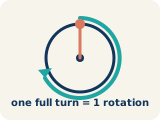
rotación
rotación
One full turn all the way around.
ES Una vuelta completa.
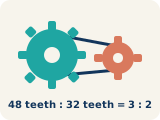
engranaje
engranaje
A wheel with teeth that turns another wheel.
ES Una rueda con dientes que hace girar a otra.

razón
razón
A way to compare two amounts, like 3 to 2.
ES Una manera de comparar dos cantidades, como 3 a 2.

razones equivalentes
razones equivalentes
Ratios that compare in the same way.
ES Razones que comparan de la misma manera.
Which word fits?¿Qué palabra encaja?
🎉 Quiz done!¡Prueba terminada!
First-try stars:Estrellas al primer intento:
Tap a word on the left, then tap its matching definition on the right! ¡Toca una palabra a la izquierda y su significado a la derecha!
Pick a game and play as a team. Nothing here is timed, and every game can be replayed as many times as you like. Escojan un juego y jueguen en equipo. Nada aquí tiene cronómetro, y pueden repetir cada juego cuantas veces quieran.
Try the recommended mission. Student: explain; partner: ask one question, then switch. Paper drawings work for every object. Prueba la misión recomendada. Estudiante: explica; acompañante: haz una pregunta, luego cambien. Puedes dibujar los objetos en papel.
One mission is enough. You can also work solo and explain in writing.Una misión es suficiente. También puedes trabajar a solas y explicar por escrito.
Choose an earlier math problem and solve it again, using paper if needed. Compare the strategies. Explain one improvement, one useful mistake, and one question you want to explore next.
Elige un problema anterior y resuélvelo otra vez, en papel si hace falta. Compara las estrategias. Explica una mejora, un error útil y una pregunta que quieras explorar después.
Show a labeled drawing, table, or equation. Your partner asks one question; working alone, write your explanation.
Muestra un dibujo con etiquetas, una tabla o una ecuación. Tu acompañante hace una pregunta; a solas, escribe tu explicación.
Choose ONE game. Quick Quiz practices this lesson; the other games review related skills. Play together or solo, without a timer. Elige UN juego. Reto rápido practica esta lección; los demás repasan temas relacionados. Juega acompañado o a solas, sin cronómetro.
Build a chain. The left side of each domino is the match for the problem on the end of the chain. Tap the domino that fits next. Armen una cadena. El lado izquierdo de cada ficha es la pareja del problema al final de la cadena. Toquen la ficha que encaja.
A student and a grown-up share one chain. Take turns placing, and switch coach and player each time. There is no winner and no timer.Un estudiante y un adulto comparten una cadena. Colocan fichas por turnos y cambian de entrenador y jugador cada vez. No hay ganador ni cronómetro.
🎉 Chain complete! The last problem links back to the first domino: a perfect loop.¡Cadena completa! El último problema conecta con la primera ficha: un círculo perfecto.
Take turns — student answers one, then a family member answers the next. Watch for the trick statements! Por turnos: el estudiante responde una y luego un familiar responde la siguiente. ¡Cuidado con las trampas!
Tap a card, then tap the bin it belongs in. Talk it through before you tap! Toquen una tarjeta y luego el cesto al que pertenece. ¡Conversen antes de tocar!
Everyone votes and says WHY. Then tap to see what the math says — sometimes it is a tie! Todos votan y dicen POR QUÉ. Luego toquen para ver qué dicen las matemáticas: ¡a veces es empate!
🔎 What the math saysLo que dicen las matemáticas
Reinforce tonight's topic with a quick family game. You ask; your student decides! Refuercen el tema de hoy con un juego rápido en familia. ¡Ustedes preguntan; su estudiante decide!
🎮 Play together! Use the same multiplier on BOTH parts of the ratio. 🎮 ¡Jueguen juntos! Usen el mismo multiplicador en AMBAS partes de la razón.
The bigger review game for tonight's lesson — sort, match and choose. A wrong answer gives a hint and lets your student try again. No timer. El juego de repaso más grande para la lección de hoy — clasificar, emparejar y elegir. Si se equivocan, reciben una pista y lo intentan otra vez. Sin cronómetro.
Use this as a photobooth for the work itself: point the camera at tonight's notebook page, the scratchpad or the whiteboard and take the picture — or pose holding it up. Choose a frame, add stickers, then download it, print it, or add it to your optional reflection. The photo is never uploaded; it stays on this device. Úsenla como cabina de fotos del trabajo: apunten la cámara a la página del cuaderno, al borrador o a la pizarra y tomen la foto, o posen sosteniéndola. Elijan un marco, agreguen calcomanías y luego descárguenla, imprímanla o agréguenla a la reflexión opcional. La foto nunca se sube a internet; se queda en este dispositivo.
Camera Ready!¡Cámara lista!
Tap “Start Camera” to photograph tonight’s work, or use “Upload Work” below. The photo stays on this device.Toca “Iniciar Cámara” para fotografiar el trabajo de hoy, o usa “Subir Foto”. La foto se queda en este dispositivo.
Holding your open notebook or paper up next to your smile makes the best shot! You can also snap a photo of just your written work. ¡Sostener el cuaderno abierto junto a su sonrisa crea la mejor foto! También pueden tomar la foto solo de su trabajo escrito.
How many teeth does each gear have?
¿Cuántos dientes tiene cada engranaje?
What happens with one full turn of the pedals?
¿Qué pasa con una vuelta completa de los pedales?
Can you write that comparison as a ratio?
¿Puedes escribir esa comparación como una razón?
Just add the teeth together.
Solo suma los dientes.
Bigger gear always means faster.
Un engranaje más grande siempre significa más rápido.
Ratios are only for recipes.
Las razones solo sirven para recetas.
Family Math Studio
Lesson 10.4MPP.4
Math is Ingenuity
Use ratios and models to explain a clever fix for a real problem.
NameDate
Tonight's spark
A bike shop ticket lists two gears. The pedal gear has 48 teeth. The back wheel gear has 32 teeth. You pedal around one time. How many times does the back wheel spin?
Make a guess first: once, twice, or somewhere in between?
Try it
Finish each sentence in your own words.
My clever idea solves the problem of ___ by ___.
My words
One rotation of the pedals gives the back wheel ___ rotations.
My words
The ___-tooth gear turns when the ___-tooth gear turns.
My words
The ratio of pedal teeth to wheel teeth is ___:___.
My words
48:32 and ___:___ are equivalent because I divided both by ___.
My words
Talk about it
Who can have a clever idea about a problem?
Home mission
Find two jar lids, one big and one small. Stand them on the table with their rims touching. Put a sticky note on the top of each. Turn the big lid around once. Ask your student to predict first: will the small lid turn more than once?
If we get stuck, ask
Family Math Studio
Lección 10.4MPP.4
Las matemáticas son ingenio
Usar razones y modelos para explicar una solución ingeniosa a un problema real.
NombreFecha
La chispa de hoy
Una orden de un taller de bicicletas anota dos engranajes. El engranaje del pedal tiene 48 dientes. El de la rueda trasera tiene 32 dientes. Pedaleas una vuelta completa. ¿Cuántas vueltas da la rueda trasera?
Primero adivina: ¿una vez, dos veces o algo en medio?
Inténtalo
Completa cada oración con tus propias palabras.
Mi idea ingeniosa resuelve el problema de ___ con ___.
Mis palabras
Una rotación de los pedales da a la rueda trasera ___ rotaciones.
Mis palabras
El engranaje de ___ dientes gira cuando gira el de ___ dientes.
Mis palabras
La razón de dientes del pedal a dientes de la rueda es ___:___.
Mis palabras
48:32 y ___:___ son equivalentes porque dividí los dos entre ___.
Mis palabras
Conversen
¿Quién puede tener una idea ingeniosa sobre un problema?
Misión en casa
Busquen dos tapas de frasco, una grande y una pequeña. Pónganlas de pie en la mesa con los bordes juntos. Pongan una nota adhesiva en la parte de arriba de cada una. Giren la tapa grande una vuelta completa. Pidan a su estudiante que prediga primero: ¿la tapa pequeña dará más de una vuelta?
Si se atoran, pregunten