Determine the Area of Parallelograms and Rhombuses
I can find the area of a parallelogram using base × height.
How to Use This Deck
Click Present or press F11 for fullscreen. Use arrow keys to advance.
Blue boxes show exactly what to say, ask, and how long to spend.
Text boxes, polls, and drag-sort save automatically in the browser.
Press N or click 📝 in the toolbar for pacing tips and answers.
Launch the full HTML activity for independent practice.
File → Print or the print button for handout copies.
🎯 Content Objective / Objetivo de contenido
I can find the area of a parallelogram using base × height.
Today's Flow
Total pacing: ~45 min · Progress bar at top tracks your place
LAUNCH
⏱ ~10 min
⏱️ 3 MIN · THINK-PAIR-SHARE
Look at the patio blueprint with a base of 14 feet and a height of 9 feet. Why do we use the height (9 ft) and not the slanted side to find the area?
Check for Understanding #1
Teacher: If >30% thumbs down, re-teach with a fresh example before moving on.
Blueprint Review
Your architecture firm is designing a parallelogram-shaped patio for a client's backyard. The client needs to know how many square feet of pavers to order. The patio has a base of 14 feet and a height of 9 feet.
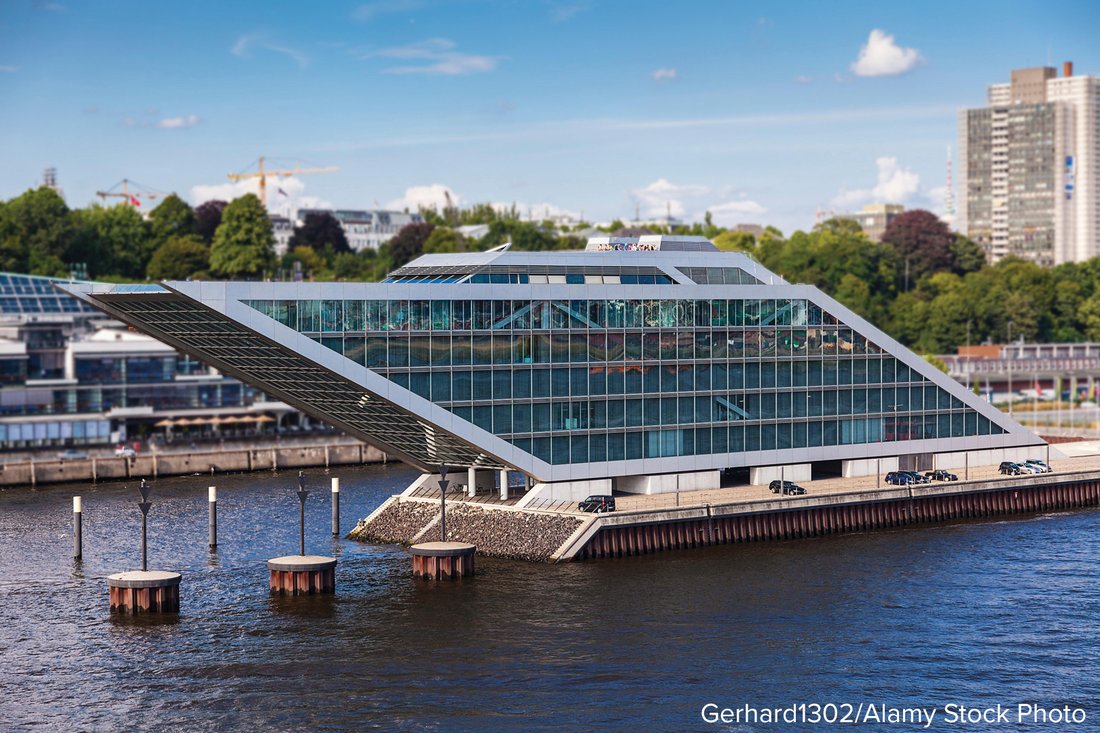
Concept Launch
💡 How do we find the area of a parallelogram?
A parallelogram is a four-sided shape with two pairs of parallel sides, like a leaning rectangle. Its area is how much flat space is inside it.
Area of Parallelograms & Rhombuses. Formula: Area = Base × Height (A = b · h). 1. Identify the base (any side). 2. Identify the perpendicular height (height must be perpendicular to base, not slanted). 3. Multiply base times height; label with square units (e.g. cm², in²)
Check for Understanding #2
Teacher: If >30% thumbs down, re-teach with a fresh example before moving on.
Now it's your turn
VOCABULARY
⏱ ~8 min
| Term / Término | Meaning / Significado | Example / Ejemplo | Visual |
|---|---|---|---|
| Area of Parallelograms Área de paralelogramos |
The space inside a parallelogram. Formula: A = b × h, using the perpendicular height. El espacio dentro de un paralelogramo. Fórmula: A = b × h, usando la altura perpendicular. |
A = b × h; if b = 10 cm and h = 6 cm, A = 60 cm². | |
| Slanted side Lado inclinado |
A side that leans instead of going straight up and down. It is not the perpendicular height. Un lado que está inclinado en vez de subir y bajar verticalmente. No es la altura perpendicular. |
In a leaning parallelogram, use the dashed 90° height—not the slanted side—in A = b × h. | |
| Parallelogram Paralelogramo |
A four-sided shape with two pairs of parallel sides. Una figura de cuatro lados con dos pares de lados paralelos. |
Think of a leaning door — the top and bottom are parallel, and the two sides are parallel, like a slanted rectangle | |
| Parallel Paralelas |
Two lines or sides that stay the same distance apart and never meet. Dos líneas o lados que se mantienen a la misma distancia y nunca se cruzan. |
The top and bottom of a parallelogram never get closer together — matching arrowheads (›) mark one parallel pair, double arrowheads (››) mark the other. | |
| Base Base |
Any side of a parallelogram can be the base. Once you pick a base, the height must be measured perpendicular (at a 90° angle) to it. Cualquier lado de un paralelogramo puede ser la base. Una vez que eliges la base, la altura debe medirse perpendicular (en un ángulo de 90°) a ella. |
Any side can be the base: choose the 10 cm side and b = 10 cm, then draw the height at 90° to that side in A = b × h | |
| Height Altura |
The straight-up distance from the base to the top. La distancia recta hacia arriba desde la base hasta la parte de arriba. |
A dashed vertical line from the top side straight down to the base, forming a 90° angle — NOT the slanted side |
Which Word Fits?
The space inside a parallelogram, found with A = b × h, is the ___.
Use It In a Sentence
Check for Understanding #3
Teacher: If >30% thumbs down, re-teach with a fresh example before moving on.
Turn & Talk — Launch
Look at the patio blueprint with a base of 14 feet and a height of 9 feet. Why do we use the height (9 ft) and not the slanted side to find the area?
👂 Listen For
Students connect 'height' to the perpendicular (straight-up) distance from base to top, and recognize the slanted side is longer and would overstate the area.
Extend: If the client tilted the patio to make it more slanted but kept the base at 14 ft and the height at 9 ft, would the area change? Justify your answer.
EXPLORE & PRACTICE
⏱ ~18 min
Visual Modeling Workspace
Use the drawing tray below to annotate the visual model. Teacher: say "Click to reveal" on key steps.
Explore Activity
Plot the vertices of a parallelogram with base 14 and height 9. Place points at (0, 0), (14, 0), (16, 9), and (2, 9) to visualize the patio.
✍️ Explore Discourse
If you cut a triangle from one side of the parallelogram and move it to the other side, what shape do you get? How does this help you find the area?
Whiteboard Moment
Show your work clearly. Be ready to explain your thinking to a partner.
Turn & Talk — Explore
On the grid you cut a triangle off one end of the parallelogram and slid it to the other side. What shape did you make, and why does that prove the area is base x height?
👂 Listen For
A strong answer names a rectangle, states the area is 14 x 9 = 126 sq ft, and explains the rearranged rectangle has the same base and height as the parallelogram.
Extend: A classmate says any quadrilateral's area is base x height. Critique this claim using what you know about parallelograms versus other four-sided shapes.
Practice Check A
What is the area of a parallelogram with base 10 cm and height 7 cm?
✍️ Show Your Work
Explain why your answer is correct using today's vocabulary.
Practice Check B
A parallelogram has an area of 54 sq ft and a base of 9 ft. What is the height?
✍️ Show Your Work
Explain why your answer is correct using today's vocabulary.
Area Grid Shading
Click cells to shade area. Count shaded squares.
✍️ Justify Your Thinking
Sort each parallelogram by whether its area is greater than 50 sq units or 50 or less.
A classmate turned in the work below. One step has a mistake. Read every step, find it, name it, and fix it.
Choose ONE option to show what you know — then do it in the workspace below.
Use evidence from today's lesson to complete each frame.
Today's key idea is: "Area of Parallelograms & Rhombuses. Formula: Area = Base × Height (A = b · h). 1. Identify the base (any side). 2. Identify the perpendicular height (height must be perpendicular to base, not slanted). 3. Multiply base times height; label with square units (e.g. cm², in²)" — and it works because ___.
Because Area of Parallelograms means ___, but a tricky part is ___, so I have to ___.
A common mistake with Area of Parallelograms is ___. It happens because ___, and the fix is ___.
I can prove my answer is correct by ___, using Slanted side to check my work.
✍️ TWR · WRITE 3 SENTENCES · 7 MIN
Area of Parallelograms & Rhombuses. Formula: Area = Base × Height (A = b · h). 1. Identify the base (any side). 2. Identify the perpendicular height (height must be perpendicular to base, not slanted). 3. Multiply base times height; label with square units (e.g. cm², in²) because ___
Area of Parallelograms & Rhombuses. Formula: Area = Base × Height (A = b · h). 1. Identify the base (any side). 2. Identify the perpendicular height (height must be perpendicular to base, not slanted). 3. Multiply base times height; label with square units (e.g. cm², in²) but ___
Area of Parallelograms & Rhombuses. Formula: Area = Base × Height (A = b · h). 1. Identify the base (any side). 2. Identify the perpendicular height (height must be perpendicular to base, not slanted). 3. Multiply base times height; label with square units (e.g. cm², in²) so ___
🌱 TWR · GROW THE KERNEL · 6 MIN
Answer these to add detail
Sentence starters (tap to use)
Student Workspace
Plot the vertices of a parallelogram with base 14 and height 9. Place points at (0, 0), (14, 0), (16, 9), and (2, 9) to visualize the patio.
| Column A | Column B |
|---|---|
✏️ Sketch Your Strategy
Differentiation Paths
Step-by-step with a worked model and sentence frames.
What is the area of a parallelogram with base 10 cm and height 7 cm?
Core practice aligned to the standard.
Extension with error analysis or multi-step reasoning.
Partner Activity
Work with your partner on the practice problems at your differentiation path level. Explain each step using math vocabulary.
Check for Understanding #4
Teacher: If >30% thumbs down, re-teach with a fresh example before moving on.
Real-World Connection
🌍 Math in the Wild
A landscape architect is tiling a parallelogram-shaped courtyard. The courtyard has a base of 18 feet and a height of 10 feet. Each tile covers 2 square feet.
✍️ Connection Reasoning
How many tiles does the architect need?
The courtyard's area is ___ sq ft because A = ___ x ___ . She needs ___ tiles because ___ / 2 = ___.
Turn & Talk — Connect
The landscape architect tiles an 18 ft by 10 ft parallelogram courtyard and each tile covers 2 sq ft. Talk through how you find the number of tiles.
👂 Listen For
Students compute area = 180 sq ft, then divide 180 / 2 = 90 tiles, and explain why dividing by the tile size gives the count.
Extend: Tiles come in boxes of 12. Generalize a rule for finding how many full boxes the architect must buy for any courtyard area, and apply it here.
Summarize: Determine the Area of Parallelograms and Rhombuses
Area of Parallelograms & Rhombuses. Formula: Area = Base × Height (A = b · h). 1. Identify the base (any side). 2. Identify the perpendicular height (height must be perpendicular to base, not slanted). 3. Multiply base times height; label with square units (e.g. cm², in²)
In your own words:
CLOSURE & REFLECT
⏱ ~8 min
Today I learned that ___ because ___.
One thing I am still not sure about is ___.
A parallelogram has a base of 13 inches and a height of 5 inches. What is its area?
Bonus Exit Check
What is the area of a parallelogram with base 9 cm and height 5 cm?
✍️ Show Your Work
Explain why your answer is correct using today's vocabulary.
Reflection & Self-Assessment
Continue Learning
Launch the Full Interactive Activity
Students continue practice in the HTML lesson engine with auto-check, hints, and differentiation.
Family Connection
Share tonight's family homework and discuss one vocabulary word at home.
Open Family Homework ↗Teacher Notes
⏱️ Pacing Guide
- Launch & vocab: 12 min
- I Do / We Do / You Do: 15 min
- Explore & practice: 15 min
- Connect & closure: 8 min
Total: ~45 min
🎯 Listen For · Common Errors
• Students connect 'height' to the perpendicular (straight-up) distance from base to top, and recognize the slanted side is longer and would overstate the area.
• A strong answer names a rectangle, states the area is 14 x 9 = 126 sq ft, and explains the rearranged rectangle has the same base and height as the parallelogram.
• Students compute area = 180 sq ft, then divide 180 / 2 = 90 tiles, and explain why dividing by the tile size gives the count.
• Listen for students naming a specific strategy tied to 6.GR.1 — not just "I multiplied." They should connect steps to the key idea.
Common mistake: The most common mistake in Area of Parallelograms is multiplying the base by the slanted side instead of the perpendicular height. For a parallelogram with a base of 16 ft, a perpendicular height of 9 ft, and a slanted side of 11 ft, students compute 16 × 11 = 176 square feet instead of the correct 16 × 9 = 144 square feet. The height must be the straight-up (perpendicular) distance between the base and its opposite side, not the length of the slanted side, even though the slanted side is often the number that 'looks' like it belongs in the formula.
Answer Key (Teacher Appendix)
Hide this slide during presentation or move to the end of your copy.
✓ Practice 1: 70 sq cm — A = b × h = 10 × 7 = 70 square centimeters.
✓ Practice 2: 6 ft — A = b × h → 54 = 9 × h → h = 54 ÷ 9 = 6 ft.
✓ Practice 3: 45 sq cm — A = b × h = 9 × 5 = 45 square centimeters.
✓ Practice 4: The perpendicular distance between the base and the opposite side — The height is always the perpendicular (straight up-and-down) distance between the base and the opposite side, not the slanted side.
✓ Exit ticket: 65 sq in — A = b x h = 13 x 5 = 65 square inches.