Touch and changeToca y cambia
Move, type, tap, or drag in the model. Watch what changes.Mueve, escribe, toca o arrastra en el modelo. Observa qué cambia.
Unit 2 · Understanding the World Around Us Through StatisticsUnidad 2 · Entender el mundo que nos rodea con la estadística
TicketBoleto
A cargo scale reads 342.6 kg. The crew unloads 128.75 kg of food, then loads 56.4 kg of samples. What does the scale read now?Una balanza de carga marca 342.6 kg. La tripulación descarga 128.75 kg de comida y luego carga 56.4 kg de muestras. ¿Qué marca ahora la balanza?
Five short steps, about 15–20 minutes: watch the idea, try one together, solve 10 in three levels, check, celebrate.Cinco pasos cortos, unos 15–20 minutos: miren la idea, prueben uno juntos, resuelvan 10 en tres niveles, revisen y celebren.
Optional. No grades, no account. Your place is saved on this device.Opcional. Sin calificaciones ni cuenta. Su avance se guarda en este dispositivo.
Tonight's ideaLa idea de hoy Add and subtract decimals in several steps, keeping a running total.Sumar y restar decimales en varios pasos, llevando un total corrido.
💡 Draw fraction bars, tape diagrams, equations, or line up decimals together!💡 ¡Dibujen barras de fracciones, modelos o alineen decimales juntos!
Step 1 of 5Paso 1 de 5
Read the goal and look at the picture. Then go through the example one step at a time.Lean la meta y miren el dibujo. Luego sigan el ejemplo un paso a la vez.
Add and subtract decimals in several steps, keeping a running total.
Sumar y restar decimales en varios pasos, llevando un total corrido.
In class we usedEn clase usamos the running logel registro corrido.
Why it worksPor qué funciona A calculator gets the same 270.25. Writing each running total with the points lined up makes it easy to spot a slip in either step.Una calculadora da el mismo 270.25. Anotar cada total parcial con los puntos alineados hace fácil encontrar un error en cualquiera de los pasos.
Your case:Su caso: Tonight we use decimal adding and subtracting in a running log — a weight that goes down when something is unloaded and up when something is loaded.Esta noche usamos la suma y la resta de decimales en un registro continuo — un peso que baja cuando se descarga algo y sube cuando se carga algo.
Tap a clue to read what it means.Toquen una pista para leer qué significa.
Look at the picture and the story. Say it out loud, or type a few words. There is no wrong answer here.Mira el dibujo y la historia. Dilo en voz alta o escribe unas palabras. Aquí no hay respuestas incorrectas.
Just for you. It stays on this device. We ask again at the end.Solo para ti. Se queda en este dispositivo. Preguntamos otra vez al final.
What is 7.3 − 2.85?¿Cuánto es 7.3 − 2.85?
Not yet. Try another look.Todavía no. Intenta otra mirada.
Write 7.3 as 7.30 and line up the points: 7.30 − 2.85 = 4.45.Escribe 7.3 como 7.30 y alinea los puntos: 7.30 − 2.85 = 4.45.
What is 6.3 ÷ 0.9?¿Cuánto es 6.3 ÷ 0.9?
Not yet. Try another look.Todavía no. Intenta otra mirada.
Multiply both numbers by 10: 63 ÷ 9 = 7.Multiplica ambos números por 10: 63 ÷ 9 = 7.
Step 2 of 5Paso 2 de 5
Do this one side by side. Use the model, and ask for a hint whenever you want one.Háganlo lado a lado. Usen el modelo y pidan una pista cuando quieran.
Try this one togetherPrueben este juntos
A tank holds 45.5 liters. You drain 12.85 liters, then pour in 7.2 liters.Un tanque tiene 45.5 litros. Sacan 12.85 litros, luego vierten 7.2 litros.
Is draining an add or a subtract? Do that step and write the running total.¿Sacar es sumar o restar? Hagan ese paso y escriban el total parcial.
Subtract: 45.50 − 12.85 = 32.65 liters.Restar: 45.50 − 12.85 = 32.65 litros.
Write 45.5 as 45.50 first so both numbers have two decimal places.Escriban 45.5 como 45.50 primero para que ambos tengan dos cifras decimales.
Now pour in 7.2 liters. What is in the tank?Ahora viertan 7.2 litros. ¿Qué hay en el tanque?
32.65 + 7.20 = 39.85 liters.32.65 + 7.20 = 39.85 litros.
Write 7.2 as 7.20 and line the decimal points up in a column.Escriban 7.2 como 7.20 y alineen los puntos decimales en columna.
Does the answer make sense? Compare it to the starting amount.¿Tiene sentido la respuesta? Compárenla con la cantidad inicial.
39.85 is less than 45.5 — correct, since more came out than went in.39.85 es menor que 45.5 — correcto, porque salió más de lo que entró.
A quick sense-check catches a misplaced decimal point fast.Una revisión rápida de sentido atrapa un punto decimal mal puesto.
Compare center and spread as you rearrange the data points.Compara el centro y la dispersión mientras reorganizas los puntos.
Change one value. Watch what changes in the picture and answer.Cambia un valor. Mira qué cambia en el dibujo y la respuesta. Say: “When ___ changes, ___ changes.”Di: “Cuando ___ cambia, ___ cambia.”
Before you go on: say one thing the model showed you.Antes de seguir: digan una cosa que les mostró el modelo.
Line up place values for tonight's decimal addition and subtraction.Alineen los valores posicionales para sumar y restar decimales hoy.
| Hundreds Centenas | Tens Decenas | Ones Unidades | . | Tenths Décimos | Hundredths Centésimos | Thousandths Milésimos |
|---|---|---|---|---|---|---|
| . | ||||||
| . |
Use Decimal Columns to create one example together before solving the practice problems.Usen Columnas decimales para crear un ejemplo juntos antes de resolver los problemas.
Change the numbers. Explain what the picture shows.Cambia los números. Explica qué muestra el dibujo.
Move, type, tap, or drag in the model. Watch what changes.Mueve, escribe, toca o arrastra en el modelo. Observa qué cambia.
Record one equation, value, or relationship you can see.Escribe una ecuación, un valor o una relación que puedas ver.
I notice ___ changes when ___ changes. This shows ___.Noto que ___ cambia cuando ___ cambia. Esto muestra ___.
Ask: "Where do you see the numbers from tonight's math in this model?"Pregunta: "¿Dónde ves los números de la tarea de hoy en este modelo?"
Add and subtract decimals in several steps, keeping a running total.
Sumar y restar decimales en varios pasos, llevando un total corrido.
In a multi-step problem, do one operation at a time and write the running total down before starting the next. Line up the decimal POINTS — not the right edges — and add zeros so every number has the same number of decimal places.
En un problema de varios pasos, haz una operación a la vez y escribe el total parcial antes de empezar la siguiente. Alinea los PUNTOS decimales — no los bordes derechos — y agrega ceros para que todos los números tengan la misma cantidad de cifras decimales.
Read the story: the scale reads 342.6 kg, the crew unloads 128.75 kg, then loads 56.4 kg.
Lee la historia: la balanza marca 342.6 kg, la tripulación descarga 128.75 kg y luego carga 56.4 kg.
Subtract for unloading.
Resta al descargar.
Write 342.6 as 342.60 to match places: 342.60 − 128.75 = 213.85 kg.
Escribe 342.6 como 342.60 para igualar las cifras: 342.60 − 128.75 = 213.85 kg.
Add for loading.
Suma al cargar.
Write 56.4 as 56.40 to match: 213.85 + 56.40 = 270.25 kg.
Escribe 56.4 como 56.40 para que coincida: 213.85 + 56.40 = 270.25 kg.
Check: 270.25 kg is less than 342.6 kg, which makes sense because more was unloaded than loaded.
Comprueba: 270.25 kg es menos que 342.6 kg, y eso tiene sentido porque se descargó más de lo que se cargó.
Listen for "place value" (valor posicional) — tenths under tenths, hundredths under hundredths.
Escuchen "valor posicional" — décimas bajo décimas, centésimas bajo centésimas.
Adding a zero at the end of a decimal never changes its value. 8.3 and 8.30 are the same number.
Agregar un cero al final de un decimal nunca cambia su valor. 8.3 y 8.30 son el mismo número.
Ask whether each step is a gain or a loss BEFORE the arithmetic. That is what decides plus or minus.
Pregunten si cada paso es una ganancia o una pérdida ANTES de la aritmética. Eso decide más o menos.
Step 3 of 5Paso 3 de 5
One at a time. Work on your own; a grown-up can watch.Uno a la vez. Trabaja solo; un adulto puede observar.
10 problems. Hints are always okay. 10 problemas. Las pistas siempre están bien.
+0 bonusextraDown means take away.
Bajar significa quitar.
Does the weight go up or down when something is unloaded?
¿El peso sube o baja cuando se descarga algo?
Unloading takes weight away, so subtract. So the answer is: Subtract.
Descargar quita peso, así que se resta. Entonces la respuesta es: Restar.
A scale reads 150 kg. The crew unloads 15.5 kg. Which calculation finds the new reading?Una báscula marca 150 kg. La tripulación descarga 15.5 kg. ¿Qué operación halla la nueva lectura?
Answer key for families — compare, then talk about why.Clave de respuestas para la familia — comparen y hablen del porqué.
Not tried yet? Close this and give it one try first. A wrong first try still helps.¿Todavía no lo intentaron? Ciérrenla y hagan un intento primero. Un primer intento equivocado también ayuda.
Why:Por qué: Unloading takes weight away, so subtract. So the answer is: Subtract.Descargar quita peso, así que se resta. Entonces la respuesta es: Restar.
Write 50.2 as 50.20 and regroup.
Escribe 50.2 como 50.20 y reagrupa.
Do both numbers have the same number of decimal places?
¿Los dos números tienen la misma cantidad de lugares decimales?
50.20 − 18.75 = 31.45.
50.20 − 18.75 = 31.45.
What is 50.2 − 18.75?¿Cuánto es 50.2 − 18.75?
Answer key for families — compare, then talk about why.Clave de respuestas para la familia — comparen y hablen del porqué.
Not tried yet? Close this and give it one try first. A wrong first try still helps.¿Todavía no lo intentaron? Ciérrenla y hagan un intento primero. Un primer intento equivocado también ayuda.
Why:Por qué: 50.20 − 18.75 = 31.45.
Thinking you can line up the right edges. Line up the decimal points, adding zeros so every number has the same decimal places.
Pensar que pueden alinear los bordes de la derecha. Alineen los puntos decimales y agreguen ceros para que todos los números tengan los mismos lugares decimales.
I started with ___. After spending, I had ___. After the allowance, I had ___. At the end I had ___.
Empecé con ___. Después de gastar, tenía ___. Después de recibir dinero, tenía ___. Al final tenía ___.
Pouring out is subtract: 8.50 − 2.75 = 5.75. Adding is plus: 5.75 + 1.60 = 7.35 liters.
Sacar es restar: 8.50 − 2.75 = 5.75. Agregar es sumar: 5.75 + 1.60 = 7.35 litros.
A jug holds 8.5 liters. You pour out 2.75 liters, then add 1.6 liters. How many liters are in the jug now?Una jarra tiene 8.5 litros. Sacas 2.75 litros y luego agregas 1.6 litros. ¿Cuántos litros hay ahora en la jarra?
Answer key for families — compare, then talk about why.Clave de respuestas para la familia — comparen y hablen del porqué.
Not tried yet? Close this and give it one try first. A wrong first try still helps.¿Todavía no lo intentaron? Ciérrenla y hagan un intento primero. Un primer intento equivocado también ayuda.
Why:Por qué: Pouring out is subtract: 8.50 − 2.75 = 5.75. Adding is plus: 5.75 + 1.60 = 7.35 liters.Sacar es restar: 8.50 − 2.75 = 5.75. Agregar es sumar: 5.75 + 1.60 = 7.35 litros.
Place values match when the decimal points are in a line.
Los valores posicionales coinciden cuando los puntos decimales están en línea.
What must line up in the column?
¿Qué debe quedar alineado en la columna?
Write 25.3 as 25.30 and line up the decimal points: 25.30 and 4.75. So the answer is: 25.30 and 4.75, with the decimal points lined up.
Escribe 25.3 como 25.30 y alinea los puntos decimales: 25.30 y 4.75. Entonces la respuesta es: 25.30 y 4.75, con los puntos decimales alineados.
To add 25.3 and 4.75, how should you write the numbers?Para sumar 25.3 y 4.75, ¿cómo debes escribir los números?
Answer key for families — compare, then talk about why.Clave de respuestas para la familia — comparen y hablen del porqué.
Not tried yet? Close this and give it one try first. A wrong first try still helps.¿Todavía no lo intentaron? Ciérrenla y hagan un intento primero. Un primer intento equivocado también ayuda.
Why:Por qué: Write 25.3 as 25.30 and line up the decimal points: 25.30 and 4.75. So the answer is: 25.30 and 4.75, with the decimal points lined up.Escribe 25.3 como 25.30 y alinea los puntos decimales: 25.30 y 4.75. Entonces la respuesta es: 25.30 y 4.75, con los puntos decimales alineados.
Do one step at a time and write the running total.
Haz un paso a la vez y escribe el total corriente.
Is each step an add or a subtract?
¿Cada paso es una suma o una resta?
120.50 − 40.25 = 80.25, then 80.25 + 15.50 = 95.75 kg.
120.50 − 40.25 = 80.25 y luego 80.25 + 15.50 = 95.75 kg.
A scale reads 120.5 kg. The crew unloads 40.25 kg, then loads 15.5 kg. What is the final reading?Una báscula marca 120.5 kg. La tripulación descarga 40.25 kg y luego carga 15.5 kg. ¿Cuál es la lectura final?
Answer key for families — compare, then talk about why.Clave de respuestas para la familia — comparen y hablen del porqué.
Not tried yet? Close this and give it one try first. A wrong first try still helps.¿Todavía no lo intentaron? Ciérrenla y hagan un intento primero. Un primer intento equivocado también ayuda.
Why:Por qué: 120.50 − 40.25 = 80.25, then 80.25 + 15.50 = 95.75 kg.120.50 − 40.25 = 80.25 y luego 80.25 + 15.50 = 95.75 kg.
Subtract first, then add, and keep the running total.
Resta primero, luego suma, y lleva el total corriente.
Which step lowers the weight and which raises it?
¿Qué paso baja el peso y cuál lo sube?
200.00 − 75.50 = 124.50, then 124.50 + 20.25 = 144.75 kg.
200.00 − 75.50 = 124.50 y luego 124.50 + 20.25 = 144.75 kg.
A scale reads 200 kg. The crew unloads 75.5 kg, then loads 20.25 kg. What is the final reading?Una báscula marca 200 kg. La tripulación descarga 75.5 kg y luego carga 20.25 kg. ¿Cuál es la lectura final?
Answer key for families — compare, then talk about why.Clave de respuestas para la familia — comparen y hablen del porqué.
Not tried yet? Close this and give it one try first. A wrong first try still helps.¿Todavía no lo intentaron? Ciérrenla y hagan un intento primero. Un primer intento equivocado también ayuda.
Why:Por qué: 200.00 − 75.50 = 124.50, then 124.50 + 20.25 = 144.75 kg.200.00 − 75.50 = 124.50 y luego 124.50 + 20.25 = 144.75 kg.
Do one step at a time, lining up the decimal points.
Haz un paso a la vez, alineando los puntos decimales.
Does each step add liquid or take it away?
¿Cada paso agrega líquido o lo quita?
30.50 + 4.25 = 34.75, then 34.75 − 12.60 = 22.15 liters.
30.50 + 4.25 = 34.75 y luego 34.75 − 12.60 = 22.15 litros.
A tank holds 30.5 liters. You pour in 4.25 liters, then use 12.6 liters. How many liters are left?Un tanque tiene 30.5 litros. Echas 4.25 litros y luego usas 12.6 litros. ¿Cuántos litros quedan?
Answer key for families — compare, then talk about why.Clave de respuestas para la familia — comparen y hablen del porqué.
Not tried yet? Close this and give it one try first. A wrong first try still helps.¿Todavía no lo intentaron? Ciérrenla y hagan un intento primero. Un primer intento equivocado también ayuda.
Why:Por qué: 30.50 + 4.25 = 34.75, then 34.75 − 12.60 = 22.15 liters.30.50 + 4.25 = 34.75 y luego 34.75 − 12.60 = 22.15 litros.
Easier problems to practice the idea. Do these first together. Problemas más fáciles para practicar la idea. Hagan estos primero juntos.
Add: 12.40 + 3.75.
Suma: 12.40 + 3.75.
Write 12.4 as 12.40 and stack it over 3.75 with the points aligned.
Escribe 12.4 como 12.40 y ponlo sobre 3.75 con los puntos alineados.
12.40 + 3.75 = 16.15. Lining up the right edges (the 4 under the 5) shifts 3.75 to 0.375 and produces 12.775 — the classic error this lesson is about. Estimate to catch it: 12 + 4 is about 16, not about 13.
12.40 + 3.75 = 16.15. Alinear los bordes derechos (el 4 debajo del 5) corre 3.75 a 0.375 y produce 12.775 — el error clásico de esta lección. Estima para detectarlo: 12 + 4 es cerca de 16, no cerca de 13.
A student adds 12.4 + 3.75 and gets 16.15. Another gets 12.775. Who is right, and what was the other student's mistake?Un estudiante suma 12.4 + 3.75 y obtiene 16.15. Otro obtiene 12.775. ¿Quién tiene razón, y cuál fue el error del otro?
Answer key for families — compare, then talk about why.Clave de respuestas para la familia — comparen y hablen del porqué.
Not tried yet? Close this and give it one try first. A wrong first try still helps.¿Todavía no lo intentaron? Ciérrenla y hagan un intento primero. Un primer intento equivocado también ayuda.
Why:Por qué: 12.40 + 3.75 = 16.15. Lining up the right edges (the 4 under the 5) shifts 3.75 to 0.375 and produces 12.775 — the classic error this lesson is about. Estimate to catch it: 12 + 4 is about 16, not about 13.12.40 + 3.75 = 16.15. Alinear los bordes derechos (el 4 debajo del 5) corre 3.75 a 0.375 y produce 12.775 — el error clásico de esta lección. Estima para detectarlo: 12 + 4 es cerca de 16, no cerca de 13.
Write 45.5 as 45.50 so both numbers have two decimal places.
Escribe 45.5 como 45.50 para que los dos números tengan dos cifras decimales.
Draining means subtract.
Sacar significa restar.
45.50 − 12.85 = 32.65 liters. 33.35 comes from a regrouping slip; 44.215 lines up the right edges instead of the decimal points (45.5 − 1.285); 58.35 adds instead of subtracting.
45.50 − 12.85 = 32.65 litros. 33.35 viene de un error al reagrupar; 44.215 alinea los bordes derechos en vez de los puntos decimales (45.5 − 1.285); 58.35 suma en vez de restar.
A tank holds 45.5 liters. You drain 12.85 liters. How much is left? (Line up the decimal points.)Un tanque tiene 45.5 litros. Sacas 12.85 litros. ¿Cuánto queda? (Alinea los puntos decimales.)
Answer key for families — compare, then talk about why.Clave de respuestas para la familia — comparen y hablen del porqué.
Not tried yet? Close this and give it one try first. A wrong first try still helps.¿Todavía no lo intentaron? Ciérrenla y hagan un intento primero. Un primer intento equivocado también ayuda.
Why:Por qué: 45.50 − 12.85 = 32.65 liters. 33.35 comes from a regrouping slip; 44.215 lines up the right edges instead of the decimal points (45.5 − 1.285); 58.35 adds instead of subtracting.45.50 − 12.85 = 32.65 litros. 33.35 viene de un error al reagrupar; 44.215 alinea los bordes derechos en vez de los puntos decimales (45.5 − 1.285); 58.35 suma en vez de restar.
Write 7.2 as 7.20 to match the two decimal places.
Escribe 7.2 como 7.20 para igualar las dos cifras decimales.
Pouring in means add.
Verter significa sumar.
32.65 + 7.20 = 39.85 liters. 33.37 lines up the right edges (32.65 + 0.72); 25.45 subtracts instead of adding; 104.65 treats 7.2 as 72.
32.65 + 7.20 = 39.85 litros. 33.37 alinea los bordes derechos (32.65 + 0.72); 25.45 resta en vez de sumar; 104.65 trata 7.2 como 72.
After draining, the tank has 32.65 liters. You pour in 7.2 liters. How much is in the tank now?Después de sacar, el tanque tiene 32.65 litros. Viertes 7.2 litros. ¿Cuánto hay ahora en el tanque?
Answer key for families — compare, then talk about why.Clave de respuestas para la familia — comparen y hablen del porqué.
Not tried yet? Close this and give it one try first. A wrong first try still helps.¿Todavía no lo intentaron? Ciérrenla y hagan un intento primero. Un primer intento equivocado también ayuda.
Why:Por qué: 32.65 + 7.20 = 39.85 liters. 33.37 lines up the right edges (32.65 + 0.72); 25.45 subtracts instead of adding; 104.65 treats 7.2 as 72.32.65 + 7.20 = 39.85 litros. 33.37 alinea los bordes derechos (32.65 + 0.72); 25.45 resta en vez de sumar; 104.65 trata 7.2 como 72.
Try these once the warm-up feels easy. It's okay to use the steps and pictures. Intenten estos cuando el calentamiento sea fácil. Está bien usar los pasos y los dibujos.
Do one step at a time: 50.00 − 3.45, then − 12.99, then + 8.50.
Haz un paso a la vez: 50.00 − 3.45, luego − 12.99, luego + 8.50.
Buying is subtracting; being paid back is adding.
Comprar es restar; que te devuelvan es sumar.
50.00 − 3.45 = 46.55; 46.55 − 12.99 = 33.56; 33.56 + 8.50 = 42.06. You have $42.06. The decimal points have to line up so that each digit is added or subtracted with the digit of the same place value — ones with ones, tenths with tenths; lining up the right-hand digits would add $8.50 as if it were $0.85.
50.00 − 3.45 = 46.55; 46.55 − 12.99 = 33.56; 33.56 + 8.50 = 42.06. Tienes $42.06. Los puntos decimales deben alinearse para que cada dígito se sume o reste con el dígito del mismo valor posicional — unidades con unidades, décimas con décimas; alinear los dígitos de la derecha sumaría $8.50 como si fuera $0.85.
You start with $50.00. You buy a snack for $3.45 and a book for $12.99, then a friend pays you back $8.50. How much money do you have now? Show each step with a running total, and explain why you had to line up the decimal points rather than the right-hand digits.Empiezas con $50.00. Compras un bocadillo por $3.45 y un libro por $12.99, y luego un amigo te devuelve $8.50. ¿Cuánto dinero tienes ahora? Muestra cada paso con un total parcial, y explica por qué tuviste que alinear los puntos decimales y no los dígitos de la derecha.
Answer key for families — compare, then talk about why.Clave de respuestas para la familia — comparen y hablen del porqué.
Not tried yet? Close this and give it one try first. A wrong first try still helps.¿Todavía no lo intentaron? Ciérrenla y hagan un intento primero. Un primer intento equivocado también ayuda.
Sample answer:Respuesta de ejemplo: 50.00 − 3.45 = 46.55; 46.55 − 12.99 = 33.56; 33.56 + 8.50 = 42.06. You have $42.06. The decimal points have to line up so that each digit is added or subtracted with the digit of the same place value — ones with ones, tenths with tenths; lining up the right-hand digits would add $8.50 as if it were $0.85.50.00 − 3.45 = 46.55; 46.55 − 12.99 = 33.56; 33.56 + 8.50 = 42.06. Tienes $42.06. Los puntos decimales deben alinearse para que cada dígito se sume o reste con el dígito del mismo valor posicional — unidades con unidades, décimas con décimas; alinear los dígitos de la derecha sumaría $8.50 como si fuera $0.85.
Compare that total with 12.00.
Compara ese total con 12.00.
Add the three days with the points lined up: 3.75 + 4.20 + 2.85.
Suma los tres días con los puntos alineados: 3.75 + 4.20 + 2.85.
3.75 + 4.20 + 2.85 = 10.80 km, and 12.00 − 10.80 = 1.20 km short. 0.8 forgets the 0.4 tenths in 4.2; 1.29 misaligns a decimal; the total is below 12, so she has not passed the goal.
3.75 + 4.20 + 2.85 = 10.80 km, y 12.00 − 10.80 = 1.20 km le faltan. 0.8 olvida las 0.4 décimas de 4.2; 1.29 desalinea un decimal; el total está por debajo de 12, así que no pasó la meta.
A runner logs 3.75 km on Monday, 4.2 km on Tuesday, and 2.85 km on Wednesday. Her goal is 12 km for the three days. How far is she from the goal?Una corredora registra 3.75 km el lunes, 4.2 km el martes y 2.85 km el miércoles. Su meta es 12 km en los tres días. ¿Cuánto le falta para la meta?
Answer key for families — compare, then talk about why.Clave de respuestas para la familia — comparen y hablen del porqué.
Not tried yet? Close this and give it one try first. A wrong first try still helps.¿Todavía no lo intentaron? Ciérrenla y hagan un intento primero. Un primer intento equivocado también ayuda.
Why:Por qué: 3.75 + 4.20 + 2.85 = 10.80 km, and 12.00 − 10.80 = 1.20 km short. 0.8 forgets the 0.4 tenths in 4.2; 1.29 misaligns a decimal; the total is below 12, so she has not passed the goal.3.75 + 4.20 + 2.85 = 10.80 km, y 12.00 − 10.80 = 1.20 km le faltan. 0.8 olvida las 0.4 décimas de 4.2; 1.29 desalinea un decimal; el total está por debajo de 12, así que no pasó la meta.
Write down that running total before the next step.
Anota ese total parcial antes del siguiente paso.
Do ONE operation at a time. First: 342.60 − 128.75.
Haz UNA operación a la vez. Primero: 342.60 − 128.75.
342.60 − 128.75 = 213.85, then 213.85 + 56.40 = 270.25 kg. 157.45 subtracts both amounts; 527.75 adds both; 342.6 forgets to do anything. The final weight is less than the start because more was unloaded than loaded.
342.60 − 128.75 = 213.85, luego 213.85 + 56.40 = 270.25 kg. 157.45 resta las dos cantidades; 527.75 suma las dos; 342.6 no hace nada. El peso final es menor que el inicial porque se descargó más de lo que se cargó.
A cargo scale reads 342.6 kg. The crew unloads 128.75 kg, then loads 56.4 kg. What is the final reading?Una báscula de carga marca 342.6 kg. La tripulación descarga 128.75 kg y luego carga 56.4 kg. ¿Cuál es la lectura final?
Answer key for families — compare, then talk about why.Clave de respuestas para la familia — comparen y hablen del porqué.
Not tried yet? Close this and give it one try first. A wrong first try still helps.¿Todavía no lo intentaron? Ciérrenla y hagan un intento primero. Un primer intento equivocado también ayuda.
Why:Por qué: 342.60 − 128.75 = 213.85, then 213.85 + 56.40 = 270.25 kg. 157.45 subtracts both amounts; 527.75 adds both; 342.6 forgets to do anything. The final weight is less than the start because more was unloaded than loaded.342.60 − 128.75 = 213.85, luego 213.85 + 56.40 = 270.25 kg. 157.45 resta las dos cantidades; 527.75 suma las dos; 342.6 no hace nada. El peso final es menor que el inicial porque se descargó más de lo que se cargó.
Step 4 of 5Paso 4 de 5
See what each answer shows. Fix one, then try a fresh one.Vean qué muestra cada respuesta. Corrijan una y prueben una nueva.
Finish Your Turn first. Then this page shows what each answer tells us.Primero terminen Tu turno. Luego esta página muestra qué nos dice cada respuesta.
Step 5 of 5Paso 5 de 5
Celebrate what you did, see what it showed, then take one next step or stop here.Celebren lo que hicieron, vean lo que mostró y den un siguiente paso o paren aquí.
Saved only on this device. Your teacher has not received it.Se guarda solo en este dispositivo. Su maestro o maestra no lo ha recibido.
The last stepEl último paso
Compare it with how you felt at the start.Compáralo con cómo te sentías al empezar.
Weekends never break it. Saved only on this device.Los fines de semana no la interrumpen. Se guarda solo en este dispositivo.
Name one strategy that helped, or one question to ask next time. You can stop here; no adult signature is needed.
Di una estrategia que te ayudó o una pregunta para la próxima vez. Puedes terminar aquí; no necesitas la firma de un adulto.
Answers save automatically on this device. Tap Check This Problem anytime. Las respuestas se guardan solas en este dispositivo. Toquen Revisar esta pregunta cuando quieran.
These extras are not required. Photos, recordings and reflections stay on this device. To send anything to Mr. Neft, use ClassDojo.Estos extras no son obligatorios. Las fotos, grabaciones y reflexiones quedan en este dispositivo. Para enviar algo al Sr. Neft, usa ClassDojo.
Saved on:Guardado el:
🔥 1-Night StreakRacha de 1 noche
Question draft (not sent):Borrador de pregunta (no enviado):
Family reflection:Reflexión familiar:
Student Work Photo:Foto del trabajo:
Student Voice Memo:Nota de voz del estudiante:
A personal record of practice for . Saved on this device; not submitted to the teacher.
Practice partner (optional)
Date
Ask at the table
For each step, did the balance go up or down, and how did you line up the numbers?
Try it together
Start with $50.00 in a pretend wallet. Make a running log: spend $12.75, then get $5.50, then spend $8.25. Line up the decimal points and write the balance after each step.
To start talking
I started with ___. After spending, I had ___. After the allowance, I had ___. At the end I had ___.
Pregunten en la mesa
En cada paso, ¿el saldo subió o bajó y cómo alinearon los números?
Prueben juntos
Empiecen con $50.00 en una cartera imaginaria. Hagan un registro corrido: gasta $12.75, luego recibe $5.50 y luego gasta $8.25. Alineen los puntos decimales y escriban el saldo después de cada paso.
Para empezar a hablar
Empecé con ___. Después de gastar, tenía ___. Después de recibir dinero, tenía ___. Al final tenía ___.
For each step, did the balance go up or down, and how did you line up the numbers?En cada paso, ¿el saldo subió o bajó y cómo alinearon los números?
Start your answer like this:Empiecen su respuesta así: I started with ___. After spending, I had ___. After the allowance, I had ___. At the end I had ___.Empecé con ___. Después de gastar, tenía ___. Después de recibir dinero, tenía ___. Al final tenía ___.
A strong answer sounds like:Una respuesta sólida suena así: In class we do one step at a time and write each running total: 342.60 − 128.75 = 213.85, then 213.85 + 56.40 = 270.25 kg.En clase hacemos un paso a la vez y anotamos cada total parcial: 342.60 − 128.75 = 213.85, luego 213.85 + 56.40 = 270.25 kg.
No grown-up nearby? Say your answer out loud to yourself, then write one sentence that proves it. Either language is fine.¿No hay un adulto cerca? Di tu respuesta en voz alta y escribe una oración que la pruebe. Sirve cualquiera de los dos idiomas.
Thinking you can line up the right edges. Line up the decimal points, adding zeros so every number has the same decimal places. Pensar que pueden alinear los bordes de la derecha. Alineen los puntos decimales y agreguen ceros para que todos los números tengan los mismos lugares decimales.
A different situation: A bucket holds 20.4 liters. Sam pours out 6.85 liters, then adds 3.5 liters. How much water is in the bucket now?Otra situación: Un balde tiene 20.4 litros. Sam saca 6.85 litros y luego agrega 3.5 litros. ¿Cuánta agua hay ahora en el balde?
Tap the step where the thinking went off track. Then explain why.Toca el paso donde el razonamiento se desvió. Luego explica por qué.
Not yet. Try another look.Todavía no. Intenta otra mirada.
How to fix it:Cómo corregirlo: Line up the decimal points. Write 3.5 as 3.50: 13.55 + 3.50 = 17.05. The bucket holds 17.05 liters.Alinea los puntos decimales. Escribe 3.5 como 3.50: 13.55 + 3.50 = 17.05. El balde tiene 17.05 litros.
Say it out loud:Dilo en voz alta: I line up the ___ and write ___ as ___ before I add.Alineo los ___ y escribo ___ como ___ antes de sumar.
Banks and stores keep a running balance. Each purchase subtracts and each deposit adds, and the decimals must line up so cents match cents. Los bancos y las tiendas llevan un saldo corrido. Cada compra resta y cada depósito suma, y los decimales deben alinearse para que los centavos coincidan con los centavos.
Try it at homePruébenlo en casa
Start with $50.00 in a pretend wallet. Make a running log: spend $12.75, then get $5.50, then spend $8.25. Line up the decimal points and write the balance after each step.Empiecen con $50.00 en una cartera imaginaria. Hagan un registro corrido: gasta $12.75, luego recibe $5.50 y luego gasta $8.25. Alineen los puntos decimales y escriban el saldo después de cada paso.
Tonight's mystery challengeEl reto misterioso de hoy
A cargo scale reads 342.6 kg. The crew unloads 128.75 kg, then loads 56.4 kg. What is the final reading?Una báscula de carga marca 342.6 kg. La tripulación descarga 128.75 kg y luego carga 56.4 kg. ¿Cuál es la lectura final?
Locked. Finish 10 problems and it opens. Bloqueado. Termina 10 problemas y se abre.
1. Tap a card to flip it. 2. Play the quiz. 3. Match the words. 1. Toca una tarjeta para voltearla. 2. Haz la prueba. 3. Empareja las palabras.

Decimal
Decimal
A number with a dot, like 0.5, that shows a part.
ES Un número con un punto, como 0.5, que muestra una parte.
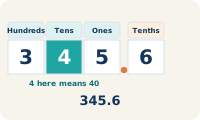
Valor posicional
Valor posicional
What a digit is worth by where it sits.
ES Lo que vale un dígito según dónde está.
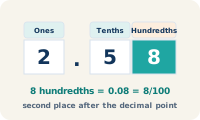
Centésimas
Centésimas
The second digit after the dot. It counts parts of 100.
ES El segundo dígito después del punto. Cuenta partes de 100.
Agregar ceros
Agregar ceros
Put zeros at the end of a decimal. The value stays.
ES Escribe ceros al final de un decimal. El valor no cambia.
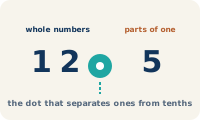
Punto decimal
Punto decimal
The dot between whole numbers and parts.
ES El punto que separa los enteros de las partes.
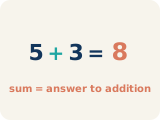
suma (total)
suma (total)
The answer when you add numbers.
ES El resultado de juntar números.
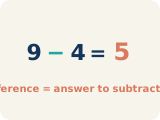
diferencia
diferencia
The answer when you subtract.
ES El resultado de restar.
Which word fits?¿Qué palabra encaja?
🎉 Quiz done!¡Prueba terminada!
First-try stars:Estrellas al primer intento:
Tap a word on the left, then tap its matching definition on the right! ¡Toca una palabra a la izquierda y su significado a la derecha!
Pick a game and play as a team. Nothing here is timed, and every game can be replayed as many times as you like. Escojan un juego y jueguen en equipo. Nada aquí tiene cronómetro, y pueden repetir cada juego cuantas veces quieran.
Try the recommended mission. Student: explain; partner: ask one question, then switch. Paper drawings work for every object. Prueba la misión recomendada. Estudiante: explica; acompañante: haz una pregunta, luego cambien. Puedes dibujar los objetos en papel.
One mission is enough. You can also work solo and explain in writing.Una misión es suficiente. También puedes trabajar a solas y explicar por escrito.
Start with $50.00 in a pretend wallet. Make a running log: spend $12.75, then get $5.50, then spend $8.25. Line up the decimal points and write the balance after each step.
Empiecen con $50.00 en una cartera imaginaria. Hagan un registro corrido: gasta $12.75, luego recibe $5.50 y luego gasta $8.25. Alineen los puntos decimales y escriban el saldo después de cada paso.
Show a labeled drawing, table, or equation. Your partner asks one question; working alone, write your explanation.
Muestra un dibujo con etiquetas, una tabla o una ecuación. Tu acompañante hace una pregunta; a solas, escribe tu explicación.
Choose ONE game. Quick Quiz practices this lesson; the other games review related skills. Play together or solo, without a timer. Elige UN juego. Reto rápido practica esta lección; los demás repasan temas relacionados. Juega acompañado o a solas, sin cronómetro.
Build a chain. The left side of each domino is the match for the problem on the end of the chain. Tap the domino that fits next. Armen una cadena. El lado izquierdo de cada ficha es la pareja del problema al final de la cadena. Toquen la ficha que encaja.
A student and a grown-up share one chain. Take turns placing, and switch coach and player each time. There is no winner and no timer.Un estudiante y un adulto comparten una cadena. Colocan fichas por turnos y cambian de entrenador y jugador cada vez. No hay ganador ni cronómetro.
🎉 Chain complete! The last problem links back to the first domino: a perfect loop.¡Cadena completa! El último problema conecta con la primera ficha: un círculo perfecto.
Take turns — student answers one, then a family member answers the next. Watch for the trick statements! Por turnos: el estudiante responde una y luego un familiar responde la siguiente. ¡Cuidado con las trampas!
Tap a card, then tap the bin it belongs in. Talk it through before you tap! Toquen una tarjeta y luego el cesto al que pertenece. ¡Conversen antes de tocar!
Everyone votes and says WHY. Then tap to see what the math says — sometimes it is a tie! Todos votan y dicen POR QUÉ. Luego toquen para ver qué dicen las matemáticas: ¡a veces es empate!
🔎 What the math saysLo que dicen las matemáticas
Reinforce tonight's topic with a quick family game. You ask; your student decides! Refuercen el tema de hoy con un juego rápido en familia. ¡Ustedes preguntan; su estudiante decide!
🎮 Play together! Line up decimal points before adding or subtracting. 🎮 ¡Jueguen juntos! Alineen los puntos decimales antes de sumar o restar.
The bigger review game for tonight's lesson — sort, match and choose. A wrong answer gives a hint and lets your student try again. No timer. El juego de repaso más grande para la lección de hoy — clasificar, emparejar y elegir. Si se equivocan, reciben una pista y lo intentan otra vez. Sin cronómetro.
Use this as a photobooth for the work itself: point the camera at tonight's notebook page, the scratchpad or the whiteboard and take the picture — or pose holding it up. Choose a frame, add stickers, then download it, print it, or add it to your optional reflection. The photo is never uploaded; it stays on this device. Úsenla como cabina de fotos del trabajo: apunten la cámara a la página del cuaderno, al borrador o a la pizarra y tomen la foto, o posen sosteniéndola. Elijan un marco, agreguen calcomanías y luego descárguenla, imprímanla o agréguenla a la reflexión opcional. La foto nunca se sube a internet; se queda en este dispositivo.
Camera Ready!¡Cámara lista!
Tap “Start Camera” to photograph tonight’s work, or use “Upload Work” below. The photo stays on this device.Toca “Iniciar Cámara” para fotografiar el trabajo de hoy, o usa “Subir Foto”. La foto se queda en este dispositivo.
Holding your open notebook or paper up next to your smile makes the best shot! You can also snap a photo of just your written work. ¡Sostener el cuaderno abierto junto a su sonrisa crea la mejor foto! También pueden tomar la foto solo de su trabajo escrito.
Are the decimal points lined up in a straight column?
¿Están los puntos decimales alineados en una columna recta?
Does this step add to the total or take away from it?
¿Este paso suma al total o le quita?
Is the answer bigger or smaller than where we started? Should it be?
¿La respuesta es mayor o menor que donde empezamos? ¿Debería serlo?
Just line up the last digits on the right.
Solo alinea los últimos dígitos de la derecha.
Adding a zero at the end changes the number, so do not.
Agregar un cero al final cambia el número, así que no lo hagas.
Do both steps at once to save time.
Haz ambos pasos a la vez para ahorrar tiempo.
These links go to specific videos about tonight's topic — not general math pages. Estos enlaces van a videos específicos sobre el tema de hoy — no a páginas generales.
Family Math Studio
Lesson 2.11 · Session 26.NOS.3
Add and Subtract Decimals
Add and subtract decimals in several steps, keeping a running total.
NameDate
Tonight's spark
A cargo scale reads 342.6 kg. The crew unloads 128.75 kg of food, then loads 56.4 kg of samples. What does the scale read now?
Guess first: will the scale read more or less than 342.6 kg at the end?
Try it
Work it out on paper. Write one answer on each line.
A scale reads 150 kg. The crew unloads 15.5 kg. Which calculation finds the new reading?
My answer
To add 25.3 and 4.75, how should you write the numbers?
My answer
What is 50.2 − 18.75?
My answer
A scale reads 120.5 kg. The crew unloads 40.25 kg, then loads 15.5 kg. What is the final reading?
My answer
A scale reads 200 kg. The crew unloads 75.5 kg, then loads 20.25 kg. What is the final reading?
My answer
Talk about it
For each step, did the balance go up or down, and how did you line up the numbers?
Home mission
Pick a bag of rice or flour at home. Say it weighs 4.5 kg. Pretend you use 1.25 kg, then add 0.8 kg. Write a running log with the decimal points in a line.
If we get stuck, ask
Family Math Studio
Lección 2.11 · Sesión 26.NOS.3
Sumar y restar decimales en varios pasos
Sumar y restar decimales en varios pasos, llevando un total corrido.
NombreFecha
La chispa de hoy
Una balanza de carga marca 342.6 kg. La tripulación descarga 128.75 kg de comida y luego carga 56.4 kg de muestras. ¿Qué marca ahora la balanza?
Primero adivina: ¿la balanza marcará al final más o menos de 342.6 kg?
Inténtalo
Resuélvelo en papel. Escribe una respuesta en cada línea.
Una báscula marca 150 kg. La tripulación descarga 15.5 kg. ¿Qué operación halla la nueva lectura?
Mi respuesta
Para sumar 25.3 y 4.75, ¿cómo debes escribir los números?
Mi respuesta
¿Cuánto es 50.2 − 18.75?
Mi respuesta
Una báscula marca 120.5 kg. La tripulación descarga 40.25 kg y luego carga 15.5 kg. ¿Cuál es la lectura final?
Mi respuesta
Una báscula marca 200 kg. La tripulación descarga 75.5 kg y luego carga 20.25 kg. ¿Cuál es la lectura final?
Mi respuesta
Conversen
En cada paso, ¿el saldo subió o bajó y cómo alinearon los números?
Misión en casa
Elijan una bolsa de arroz o harina de la casa. Digan que pesa 4.5 kg. Imaginen que usan 1.25 kg y luego agregan 0.8 kg. Escriban un registro corrido con los puntos decimales en línea.
Si se atoran, pregunten