Divide Decimals Using an Algorithm
I can divide with decimals by making the divisor a whole number first.
How to Use This Deck
Click Present or press F11 for fullscreen. Use arrow keys to advance.
Blue boxes show exactly what to say, ask, and how long to spend.
Text boxes, polls, and drag-sort save automatically in the browser.
Press N or click 📝 in the toolbar for pacing tips and answers.
Launch the full HTML activity for independent practice.
File → Print or the print button for handout copies.
🎯 Content Objective / Objetivo de contenido
I can divide with decimals by making the divisor a whole number first.
Today's Flow
Total pacing: ~45 min · Progress bar at top tracks your place
LAUNCH
⏱ ~10 min
⏱️ 3 MIN · THINK-PAIR-SHARE
The order form shows the school paid $394.50 in total for 75 workbooks. What division would tell you the cost of one workbook, and why is it division and not multiplication?
Check for Understanding #1
Teacher: If >30% thumbs down, re-teach with a fresh example before moving on.
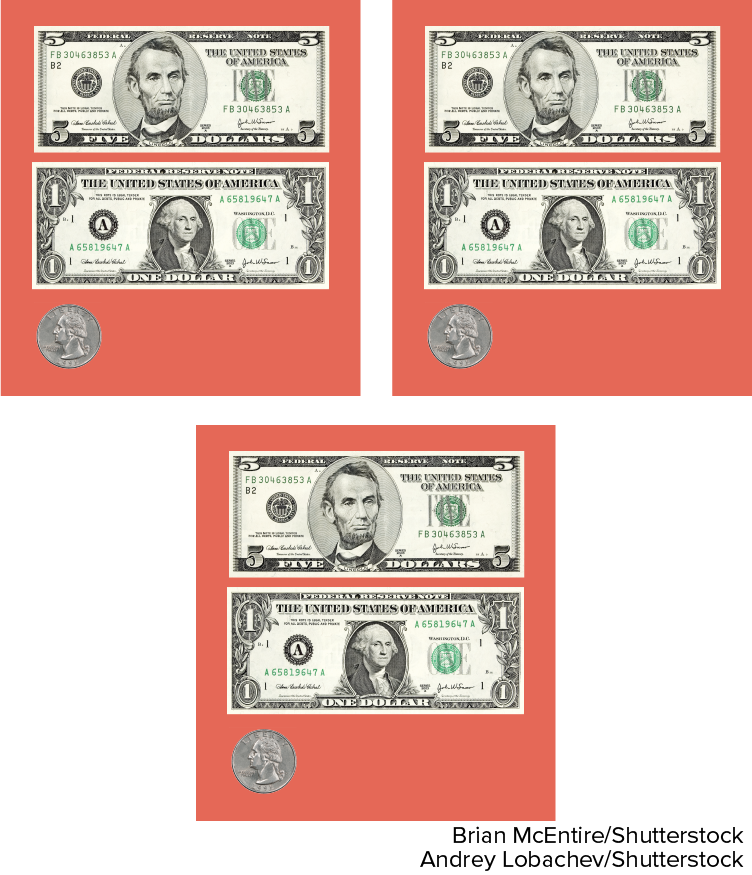
Textbook Purchases
A school bought new math workbooks as shown in the order form. What is the cost of each workbook?
Concept Launch
💡 How do you divide with decimals?
Dividing splits a total into equal groups. When you divide by a decimal, first move the point to make the divisor a whole number — then run the same long-division cycle: divide, multiply, subtract, bring down.
Decimal Division Algorithm. 1. Make the divisor a whole number: slide its decimal point to the right. 2. Slide the dividend's decimal point to the right the same number of places. 3. Write the answer's decimal point in the column directly above the dividend's point, then divide as whole numbers using Divide → Multiply → Subtract → Bring Down.
Check for Understanding #2
Teacher: If >30% thumbs down, re-teach with a fresh example before moving on.
Now it's your turn
VOCABULARY
⏱ ~8 min
| Term / Término | Meaning / Significado | Example / Ejemplo | Visual |
|---|---|---|---|
| Divide Decimals Dividir decimales |
Find a quotient with decimals by sliding both decimal points right until the divisor is a whole number. Hallar un cociente con decimales deslizando ambos puntos decimales a la derecha hasta que el divisor sea un número entero. |
8.4 ÷ 2.1 = 84 ÷ 21 = 4 | |
| Dividend Dividendo |
The total number being divided into equal groups (the number inside the division bracket). El número total que se divide en grupos iguales (el número dentro de la galera de división). |
In 8.4 ÷ 2.1 = 4, the dividend is 8.4 — the total amount being divided | |
| Divisor Divisor |
The number of equal groups you are dividing into (the number outside the division bracket). El número de grupos iguales en que divides (el número fuera de la galera de división). |
In 8.4 ÷ 2.1 = 4, the divisor is 2.1 — the number of equal groups | |
| Quotient Cociente |
The answer when you divide. La respuesta cuando divides. |
In 8.4 ÷ 2.1 = 4, the quotient is 4 — there are 4 groups | |
| Decimal Division Algorithm Algoritmo de división decimal |
The steps for dividing decimals: slide the divisor's decimal point right until the divisor is a whole number, slide the dividend's point right the same number of places, then divide. Los pasos para dividir decimales: desliza el punto decimal del divisor a la derecha hasta que sea un número entero, desliza el punto del dividendo a la derecha el mismo número de lugares y luego divide. |
8.4 ÷ 2.1 → move the point in both → 84 ÷ 21 → divide, multiply, subtract, bring down → 4 | |
| Equivalent division División equivalente |
Multiplying both numbers by 10 or 100 gives the same answer. Multiplicar ambos números por 10 o 100 da la misma respuesta. |
7.56 ÷ 0.12 = 756 ÷ 12 = 63 (both multiplied by 100) |
Which Word Fits?
Make the ___ a whole number first, then slide the dividend's point right the same number of places.
Use It In a Sentence
Check for Understanding #3
Teacher: If >30% thumbs down, re-teach with a fresh example before moving on.
Turn & Talk — Launch
The order form shows the school paid $394.50 in total for 75 workbooks. What division would tell you the cost of one workbook, and why is it division and not multiplication?
👂 Listen For
Students explain you slide the decimal point right in the divisor to make it whole (6.3 to 63) and slide the dividend's point right the same number of places, naming 18.9 as the dividend and 6.3 as the divisor.
Extend: Estimate how many pods can be filled before computing, then justify. About how many 6-kg groups fit in 18.9 kg?
EXPLORE & PRACTICE
⏱ ~18 min
Visual Modeling Workspace
Use the drawing tray below to annotate the visual model. Teacher: say "Click to reveal" on key steps.
Explore Activity
Complete the table. First slide the decimal point to the right until the divisor is a whole number, sliding it the same number of places in both numbers. Then run the long-division cycle — divide, multiply, subtract, bring down — to find the quotient.
✍️ Explore Discourse
Why does moving the point the same number of places in both numbers give you the same quotient — and why is it worth doing before you start the divide, multiply, subtract, bring down cycle?
Whiteboard Moment
Show your work clearly. Be ready to explain your thinking to a partner.
Turn & Talk — Explore
When you divided 18.9 by 6.3, how did you use equivalent division to make the divisor a whole number?
👂 Listen For
Students rewrite 18.9 ÷ 6.3 as 189 ÷ 63 = 3, explaining moving both points one place keeps the division equivalent, so 3 pods are filled.
Extend: Why does moving BOTH decimal points the same number of places keep the answer the same? Justify with what you know about equivalent fractions.
Practice Check A
A water tank holds 19.2 liters. It is poured into bottles that each hold 1.6 liters. How many bottles can be filled?
✍️ Show Your Work
Explain why your answer is correct using today's vocabulary.
Practice Check B
What is 14.4 ÷ 1.2?
✍️ Show Your Work
Explain why your answer is correct using today's vocabulary.
Ratio Table Builder
Fill the ratio table. Each row must be equivalent.
| Factor | A | B |
|---|---|---|
| ×1 | ||
| ×2 | ||
| ×3 |
✍️ Justify Your Thinking
Sort: should you multiply both numbers by 10 or by 100 to make the divisor a whole number?
A classmate turned in the work below. One step has a mistake. Read every step, find it, name it, and fix it.
Choose ONE option to show what you know — then do it in the workspace below.
Use evidence from today's lesson to complete each frame.
Today's key idea is: "Decimal Division Algorithm. 1. Make the divisor a whole number: slide its decimal point to the right. 2. Slide the dividend's decimal point to the right the same number of places. 3. Write the answer's decimal point in the column directly above the dividend's point, then divide as whole numbers using Divide → Multiply → Subtract → Bring Down." — and it works because ___.
Because Divide Decimals means ___, but a tricky part is ___, so I have to ___.
A common mistake with Divide Decimals is ___. It happens because ___, and the fix is ___.
I can prove my answer is correct by ___, using Dividend to check my work.
✍️ TWR · WRITE 3 SENTENCES · 7 MIN
Decimal Division Algorithm. 1. Make the divisor a whole number: slide its decimal point to the right. 2. Slide the dividend's decimal point to the right the same number of places. 3. Write the answer's decimal point in the column directly above the dividend's point, then divide as whole numbers using Divide → Multiply → Subtract → Bring Down. because ___
Decimal Division Algorithm. 1. Make the divisor a whole number: slide its decimal point to the right. 2. Slide the dividend's decimal point to the right the same number of places. 3. Write the answer's decimal point in the column directly above the dividend's point, then divide as whole numbers using Divide → Multiply → Subtract → Bring Down. but ___
Decimal Division Algorithm. 1. Make the divisor a whole number: slide its decimal point to the right. 2. Slide the dividend's decimal point to the right the same number of places. 3. Write the answer's decimal point in the column directly above the dividend's point, then divide as whole numbers using Divide → Multiply → Subtract → Bring Down. so ___
🌱 TWR · GROW THE KERNEL · 6 MIN
Answer these to add detail
Sentence starters (tap to use)
Student Workspace
Complete the table. First slide the decimal point to the right until the divisor is a whole number, sliding it the same number of places in both numbers. Then run the long-division cycle — divide, multiply, subtract, bring down — to find the quotient.
| Column A | Column B |
|---|---|
✏️ Sketch Your Strategy
Differentiation Paths
Step-by-step with a worked model and sentence frames.
What is 14.4 ÷ 1.2?
Core practice aligned to the standard.
Extension with error analysis or multi-step reasoning.
Partner Activity
Work with your partner on the practice problems at your differentiation path level. Explain each step using math vocabulary.
Check for Understanding #4
Teacher: If >30% thumbs down, re-teach with a fresh example before moving on.
Real-World Connection
🌍 Math in the Wild
A ribbon is 16.8 feet long. You need to cut it into pieces that are each 2.4 feet long for a craft project.
✍️ Connection Reasoning
How does decimal division help you figure out how many pieces you can cut?
I can cut ___ pieces because 16.8 ÷ 2.4 = ___.
Turn & Talk — Connect
The station has 22.5 meters of oxygen tubing, cut into hoses that are each 1.5 meters long. How does decimal division tell you how many hoses you can make?
👂 Listen For
Students rewrite 22.5 ÷ 1.5 as 225 ÷ 15 = 15, so 15 hoses can be made with none left over.
Extend: How can you check that 15 hoses is correct without redividing? Show the check.
Summarize: Divide Decimals Using an Algorithm
Decimal Division Algorithm. 1. Make the divisor a whole number: slide its decimal point to the right. 2. Slide the dividend's decimal point to the right the same number of places. 3. Write the answer's decimal point in the column directly above the dividend's point, then divide as whole numbers using Divide → Multiply → Subtract → Bring Down.
In your own words:
CLOSURE & REFLECT
⏱ ~8 min
Today I learned that ___ because ___.
One thing I am still not sure about is ___.
What is 19.2 ÷ 0.8?
Bonus Exit Check
What is 3.78 ÷ 0.6?
✍️ Show Your Work
Explain why your answer is correct using today's vocabulary.
Reflection & Self-Assessment
Continue Learning
Launch the Full Interactive Activity
Students continue practice in the HTML lesson engine with auto-check, hints, and differentiation.
Family Connection
Share tonight's family homework and discuss one vocabulary word at home.
Open Family Homework ↗Teacher Notes
⏱️ Pacing Guide
- Launch & vocab: 12 min
- I Do / We Do / You Do: 15 min
- Explore & practice: 15 min
- Connect & closure: 8 min
Total: ~45 min
🎯 Listen For · Common Errors
• Students explain you slide the decimal point right in the divisor to make it whole (6.3 to 63) and slide the dividend's point right the same number of places, naming 18.9 as the dividend and 6.3 as the divisor.
• Students rewrite 18.9 ÷ 6.3 as 189 ÷ 63 = 3, explaining moving both points one place keeps the division equivalent, so 3 pods are filled.
• Students rewrite 22.5 ÷ 1.5 as 225 ÷ 15 = 15, so 15 hoses can be made with none left over.
• Students explain that a whole-number divisor lets them divide normally, and equivalent division keeps the quotient the same while removing the decimal from the divisor.
Common mistake: A common mistake in Divide Decimals is moving the decimal point in the divisor but forgetting to move it the same number of places in the dividend. For example, in 6.4 ÷ 0.8 a student changes 0.8 to 8 but leaves the dividend as 6.4, then divides 6.4 ÷ 8 = 0.8 instead of moving both points to get 64 ÷ 8 = 8. A second version of this mistake happens when the divisor has two decimal places, like 0.12: students move both points only 1 place instead of 2, turning 9.6 ÷ 0.12 into 96 ÷ 1.2 instead of the correct 960 ÷ 12. Count the divisor's decimal places first, then move BOTH points that same number of places.
Answer Key (Teacher Appendix)
Hide this slide during presentation or move to the end of your copy.
✓ Practice 1: 12 bottles — 19.2 ÷ 1.6: multiply both by 10 → 192 ÷ 16 = 12 bottles.
✓ Practice 2: 12 — Multiply both by 10: 144 ÷ 12 = 12.
✓ Practice 3: 6.3 — Multiply both by 10: 37.8 ÷ 6 = 6.3.
✓ Practice 4: 12 — 8.4 ÷ 0.7 = 84 ÷ 7 = 12.
✓ Exit ticket: 24 — Multiply both by 10: 192 ÷ 8 = 24.