Touch and changeToca y cambia
Move, type, tap, or drag in the model. Watch what changes.Mueve, escribe, toca o arrastra en el modelo. Observa qué cambia.
Unit 3 · Ratios and RatesUnidad 3 · Razones y tasas
Price tagEtiqueta de precio
A supply shop sells 500 game tokens for $60. The rec center wants to compare this deal with other shops. How much does just 1 token cost?Una tienda vende 500 fichas de juego por $60. El centro recreativo quiere comparar esta oferta con otras tiendas. ¿Cuánto cuesta solo 1 ficha?
Five short steps, about 15–20 minutes: watch the idea, try one together, solve 10 in three levels, check, celebrate.Cinco pasos cortos, unos 15–20 minutos: miren la idea, prueben uno juntos, resuelvan 10 en tres niveles, revisen y celebren.
Optional. No grades, no account. Your place is saved on this device.Opcional. Sin calificaciones ni cuenta. Su avance se guarda en este dispositivo.
Tonight's ideaLa idea de hoy Use a unit rate, the cost for 1, to solve real problems and compare deals.Usar una tasa unitaria, el costo de 1, para resolver problemas reales y comparar ofertas.
💡 Draw fraction bars, tape diagrams, equations, or line up decimals together!💡 ¡Dibujen barras de fracciones, modelos o alineen decimales juntos!
Step 1 of 5Paso 1 de 5
Read the goal and look at the picture. Then go through the example one step at a time.Lean la meta y miren el dibujo. Luego sigan el ejemplo un paso a la vez.
Use a unit rate, the cost for 1, to solve real problems and compare deals.
Usar una tasa unitaria, el costo de 1, para resolver problemas reales y comparar ofertas.
In class we usedEn clase usamos find the cost for 1, then multiplyhallar el costo de 1 y luego multiplicar.
Why it worksPor qué funciona Doubling and the unit rate both reach $120 for 1,000 tokens. The unit rate also works for amounts that are not a double, like 350 tokens.Duplicar y la tasa unitaria llegan a $120 por 1,000 fichas. La tasa unitaria también sirve para cantidades que no son el doble, como 350 fichas.
The example:El ejemplo: Fun Supply Co. sells 500 tokens for $60. I want the cost for 1 token.Fun Supply Co. vende 500 fichas por $60. Quiero el costo de 1 ficha.
Your case:Su caso: Tonight we solve real-world rate problems by finding the unit rate — the cost or amount for just 1 — and then using it.Esta noche resolvemos problemas reales de tasas encontrando la tasa unitaria — el costo o la cantidad para solo 1 — y luego usándola.
Tap a clue to read what it means.Toquen una pista para leer qué significa.
Look at the picture and the story. Say it out loud, or type a few words. There is no wrong answer here.Mira el dibujo y la historia. Dilo en voz alta o escribe unas palabras. Aquí no hay respuestas incorrectas.
Just for you. It stays on this device. We ask again at the end.Solo para ti. Se queda en este dispositivo. Preguntamos otra vez al final.
A snail crawls 12 inches in 4 minutes. How many inches per minute?Un caracol avanza 12 pulgadas en 4 minutos. ¿Cuántas pulgadas por minuto?
Not yet. Try another look.Todavía no. Intenta otra mirada.
Divide inches by minutes: 12 ÷ 4 = 3.Divide las pulgadas entre los minutos: 12 ÷ 4 = 3.
A ratio table has the rows 2 to 5 and 4 to 10. What goes in the blank in the row 6 to ___?Una tabla de razones tiene las filas 2 a 5 y 4 a 10. ¿Qué número va en la fila 6 a ___?
Not yet. Try another look.Todavía no. Intenta otra mirada.
6 is 2 × 3, so multiply 5 by 3 too: 15.6 es 2 × 3, así que multiplica 5 por 3 también: 15.
Step 2 of 5Paso 2 de 5
Do this one side by side. Use the model, and ask for a hint whenever you want one.Háganlo lado a lado. Usen el modelo y pidan una pista cuando quieran.
Try this one togetherPrueben este juntos
A car drives 100 miles in 2 hours. Find the unit rate, then find how far it goes in 4 hours.Un carro recorre 100 millas en 2 horas. Encuentren la tasa unitaria, luego cuánto recorre en 4 horas.
Find the miles for 1 hour by dividing.Encuentren las millas para 1 hora dividiendo.
100 ÷ 2 = 50 miles per hour.100 ÷ 2 = 50 millas por hora.
Divide the miles by the hours to get miles for one hour.Dividan las millas entre las horas para obtener las millas de una hora.
Now find how far in 4 hours by multiplying.Ahora encuentren cuánto en 4 horas multiplicando.
50 × 4 = 200 miles.50 × 4 = 200 millas.
Use the unit rate (50) and multiply by the number of hours.Usen la tasa unitaria (50) y multipliquen por el número de horas.
Check together: does the answer make sense for 4 hours?Revisen juntos: ¿la respuesta tiene sentido para 4 horas?
4 hours is double 2 hours, so 200 miles is double 100 miles. It fits.4 horas es el doble de 2 horas, así que 200 millas es el doble de 100 millas. Coincide.
Checking that the answer makes sense matters more than speed.Comprobar que la respuesta tiene sentido importa más que la rapidez.
Find the cost for 1 pound, then use it for any number of pounds.Halla el costo de 1 libra y úsalo para cualquier número de libras.
Change one value. Watch what changes in the picture and answer.Cambia un valor. Mira qué cambia en el dibujo y la respuesta. Say: “When ___ changes, ___ changes.”Di: “Cuando ___ cambia, ___ cambia.”
Before you go on: say one thing the model showed you.Antes de seguir: digan una cosa que les mostró el modelo.
Change the two amounts. Divide to find the amount for one item.Cambia las dos cantidades. Divide para hallar la cantidad por un objeto.
Move, type, tap, or drag in the model. Watch what changes.Mueve, escribe, toca o arrastra en el modelo. Observa qué cambia.
Record one equation, value, or relationship you can see.Escribe una ecuación, un valor o una relación que puedas ver.
I notice ___ changes when ___ changes. This shows ___.Noto que ___ cambia cuando ___ cambia. Esto muestra ___.
Ask: "Where do you see the numbers from tonight's math in this model?"Pregunta: "¿Dónde ves los números de la tarea de hoy en este modelo?"
Use a unit rate, the cost for 1, to solve real problems and compare deals.
Usar una tasa unitaria, el costo de 1, para resolver problemas reales y comparar ofertas.
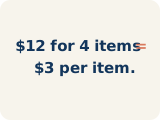
$6 ÷ 3 = $2 per snack / por merienda
A unit rate compares an amount with one unit of another quantity. Keep units visible.
Una tasa unitaria compara una cantidad con una unidad de otra. Mantén visibles las unidades.
Read the deal: 500 game tokens cost $60.
Lee la oferta: 500 fichas de juego cuestan $60.
We want the cost of 1 token.
Queremos el costo de 1 ficha.
Write the rate as a fraction, cost on top and tokens on the bottom: $60/500 tokens.
Escribe la tasa como fracción, con el costo arriba y las fichas abajo: $60/500 fichas.
Divide top and bottom by 500: 60 ÷ 500 = 0.12 and 500 ÷ 500 = 1.
Divide arriba y abajo entre 500: 60 ÷ 500 = 0.12 y 500 ÷ 500 = 1.
That is $0.12 per token.
Eso es $0.12 por ficha.
Multiply the unit rate by the amount you need.
Multiplica la tasa unitaria por la cantidad que necesitas.
For 1,000 tokens: 1,000 × $0.12 = $120.
Para 1,000 fichas: 1,000 × $0.12 = $120.
Listen for "tasa unitaria" (unit rate) — the rate written as a fraction over 1.
Escuchen "tasa unitaria" — la tasa escrita como fracción sobre 1.
Top on top, bottom on bottom: Put Cost/Total on TOP and Units on BOTTOM. Divide both parts by the bottom number.
Arriba va arriba, abajo va abajo: Pongan Costo/Total ARRIBA y Unidades ABAJO. Dividan ambas partes entre el número de abajo.
Fraction over 1: The unit rate is in fraction form over 1 ($6/1 pound = $6 per pound). Then multiply to find the new total.
Fracción sobre 1: La tasa unitaria está en forma de fracción sobre 1 ($6/1 libra = $6 por libra). Luego multipliquen para hallar el nuevo total.
Step 3 of 5Paso 3 de 5
One at a time. Work on your own; a grown-up can watch.Uno a la vez. Trabaja solo; un adulto puede observar.
10 problems. Hints are always okay. 10 problemas. Las pistas siempre están bien.
+0 bonusextraShare the cost equally among the stickers.
Reparte el costo en partes iguales entre las calcomanías.
You want the price for just 1 sticker.
Quieres el precio de solo 1 calcomanía.
$25 ÷ 100 = $0.25, so 1 sticker costs $0.25.
$25 ÷ 100 = $0.25, así que 1 calcomanía cuesta $0.25.
100 stickers cost $25. What is the cost of 1 sticker?100 calcomanías cuestan $25. ¿Cuál es el costo de 1 calcomanía?
Answer key for families — compare, then talk about why.Clave de respuestas para la familia — comparen y hablen del porqué.
Not tried yet? Close this and give it one try first. A wrong first try still helps.¿Todavía no lo intentaron? Ciérrenla y hagan un intento primero. Un primer intento equivocado también ayuda.
Why:Por qué: $25 ÷ 100 = $0.25, so 1 sticker costs $0.25.$25 ÷ 100 = $0.25, así que 1 calcomanía cuesta $0.25.
7 pounds means 7 groups of $3.
7 libras son 7 grupos de $3.
Each pound costs $3.
Cada libra cuesta $3.
7 × $3 = $21 for 7 pounds.
7 × $3 = $21 por 7 libras.
The unit rate is $3 per pound. How much do 7 pounds cost?La tasa unitaria es $3 por libra. ¿Cuánto cuestan 7 libras?
Answer key for families — compare, then talk about why.Clave de respuestas para la familia — comparen y hablen del porqué.
Not tried yet? Close this and give it one try first. A wrong first try still helps.¿Todavía no lo intentaron? Ciérrenla y hagan un intento primero. Un primer intento equivocado también ayuda.
Why:Por qué: 7 × $3 = $21 for 7 pounds.7 × $3 = $21 por 7 libras.
What makes your answer reasonable? Use the question to check it.
¿Por qué es razonable tu respuesta? Usa la pregunta para comprobarla.
Find the unit rate by dividing, then multiply it to find the amount you need.
Encuentra la tasa unitaria dividiendo, luego multiplícala para hallar la cantidad que necesitas.
One bag costs $10 ÷ 8 = $1.25. Then 20 bags cost $1.25 × 20 = $25.
Una bolsa cuesta $10 ÷ 8 = $1.25. Entonces 20 bolsas cuestan $1.25 × 20 = $25.
A corner store sells 8 bags of chips for $10. At the same price, how much do 20 bags cost?Una tienda de la esquina vende 8 bolsas de papitas por $10. Al mismo precio, ¿cuánto cuestan 20 bolsas?
Answer key for families — compare, then talk about why.Clave de respuestas para la familia — comparen y hablen del porqué.
Not tried yet? Close this and give it one try first. A wrong first try still helps.¿Todavía no lo intentaron? Ciérrenla y hagan un intento primero. Un primer intento equivocado también ayuda.
Why:Por qué: One bag costs $10 ÷ 8 = $1.25. Then 20 bags cost $1.25 × 20 = $25.Una bolsa cuesta $10 ÷ 8 = $1.25. Entonces 20 bolsas cuestan $1.25 × 20 = $25.
Write it as $10 over 4 notebooks.
Escríbelo como $10 sobre 4 cuadernos.
Divide the cost by the number of notebooks.
Divide el costo entre el número de cuadernos.
$10 ÷ 4 = $2.50 for 1 notebook.
$10 ÷ 4 = $2.50 por 1 cuaderno.
A store sells 4 notebooks for $10. What is the price of 1 notebook?Una tienda vende 4 cuadernos por $10. ¿Cuál es el precio de 1 cuaderno?
Answer key for families — compare, then talk about why.Clave de respuestas para la familia — comparen y hablen del porqué.
Not tried yet? Close this and give it one try first. A wrong first try still helps.¿Todavía no lo intentaron? Ciérrenla y hagan un intento primero. Un primer intento equivocado también ayuda.
Why:Por qué: $10 ÷ 4 = $2.50 for 1 notebook.$10 ÷ 4 = $2.50 por 1 cuaderno.
Find the price of 1 can for each brand.
Halla el precio de 1 lata de cada marca.
The brands sell different numbers of cans.
Las marcas venden distinto número de latas.
Brand X is $2.40 ÷ 3 = $0.80 and Brand Y, $0.70 per can, is $3.50 ÷ 5, so Brand Y costs less.
La marca X es $2.40 ÷ 3 = $0.80 y la marca Y, $0.70 por lata, es $3.50 ÷ 5, así que la marca Y cuesta menos.
Brand X: 3 cans for $2.40. Brand Y: 5 cans for $3.50. Which brand costs less per can?Marca X: 3 latas por $2.40. Marca Y: 5 latas por $3.50. ¿Cuál marca cuesta menos por lata?
Answer key for families — compare, then talk about why.Clave de respuestas para la familia — comparen y hablen del porqué.
Not tried yet? Close this and give it one try first. A wrong first try still helps.¿Todavía no lo intentaron? Ciérrenla y hagan un intento primero. Un primer intento equivocado también ayuda.
Why:Por qué: Brand X is $2.40 ÷ 3 = $0.80 and Brand Y, $0.70 per can, is $3.50 ÷ 5, so Brand Y costs less.La marca X es $2.40 ÷ 3 = $0.80 y la marca Y, $0.70 por lata, es $3.50 ÷ 5, así que la marca Y cuesta menos.
Count up by 0.75: 0.75, 1.50, 2.25, ...
Cuenta de 0.75 en 0.75: 0.75, 1.50, 2.25, ...
How many $0.75 fit into $6?
¿Cuántas veces cabe $0.75 en $6?
$6 ÷ $0.75 = 8, so you can buy 8 rulers.
$6 ÷ $0.75 = 8, así que puedes comprar 8 reglas.
Rulers cost $0.75 each. How many rulers can you buy with $6?Las reglas cuestan $0.75 cada una. ¿Cuántas reglas puedes comprar con $6?
Answer key for families — compare, then talk about why.Clave de respuestas para la familia — comparen y hablen del porqué.
Not tried yet? Close this and give it one try first. A wrong first try still helps.¿Todavía no lo intentaron? Ciérrenla y hagan un intento primero. Un primer intento equivocado también ayuda.
Why:Por qué: $6 ÷ $0.75 = 8, so you can buy 8 rulers.$6 ÷ $0.75 = 8, así que puedes comprar 8 reglas.
Miles go on top and gallons on the bottom.
Las millas van arriba y los galones abajo.
Miles per gallon means miles for 1 gallon.
Millas por galón significa millas para 1 galón.
300 ÷ 12 = 25, so the truck goes 25 miles per gallon.
300 ÷ 12 = 25, así que el camión recorre 25 millas por galón.
A truck uses 12 gallons of fuel for 300 miles. How many miles is that per gallon?Un camión usa 12 galones de combustible para 300 millas. ¿Cuántas millas son por galón?
Answer key for families — compare, then talk about why.Clave de respuestas para la familia — comparen y hablen del porqué.
Not tried yet? Close this and give it one try first. A wrong first try still helps.¿Todavía no lo intentaron? Ciérrenla y hagan un intento primero. Un primer intento equivocado también ayuda.
Why:Por qué: 300 ÷ 12 = 25, so the truck goes 25 miles per gallon.300 ÷ 12 = 25, así que el camión recorre 25 millas por galón.
Easier problems to practice the idea. Do these first together. Problemas más fáciles para practicar la idea. Hagan estos primero juntos.
Divide each deal's price by its number of ounces to get a cost per ounce.
Divide el precio de cada oferta entre su número de onzas para obtener el costo por onza.
Different package sizes can only be compared once both are priced per ounce.
Los envases de distinto tamaño solo se pueden comparar cuando ambos tienen precio por onza.
12 oz: $3.00 ÷ 12 = $0.25 per oz. 20 oz: $4.00 ÷ 20 = $0.20 per oz. $0.20 < $0.25, so 20 oz for $4.00 is the better buy.
12 oz: $3.00 ÷ 12 = $0.25 por oz. 20 oz: $4.00 ÷ 20 = $0.20 por oz. $0.20 < $0.25, así que 20 oz por $4.00 es la mejor compra.
The snack bar compares two popcorn deals: 12 oz for $3.00 or 20 oz for $4.00. Which is the better buy?El puesto de bocadillos compara dos ofertas de palomitas: 12 oz por $3.00 o 20 oz por $4.00. ¿Cuál es la mejor compra?
Answer key for families — compare, then talk about why.Clave de respuestas para la familia — comparen y hablen del porqué.
Not tried yet? Close this and give it one try first. A wrong first try still helps.¿Todavía no lo intentaron? Ciérrenla y hagan un intento primero. Un primer intento equivocado también ayuda.
Why:Por qué: 12 oz: $3.00 ÷ 12 = $0.25 per oz. 20 oz: $4.00 ÷ 20 = $0.20 per oz. $0.20 < $0.25, so 20 oz for $4.00 is the better buy.12 oz: $3.00 ÷ 12 = $0.25 por oz. 20 oz: $4.00 ÷ 20 = $0.20 por oz. $0.20 < $0.25, así que 20 oz por $4.00 es la mejor compra.
Divide each deal's total cost by its number of tickets.
Divide el costo total de cada oferta entre su número de boletos.
The cheaper deal is the one with the lower price for a single ticket.
La oferta más barata es la que tiene el precio más bajo por un solo boleto.
8 for $2.00: $2.00 ÷ 8 = $0.25 each. 15 for $3.00: $3.00 ÷ 15 = $0.20 each. $0.20 < $0.25, so 15 for $3.00 is cheaper per ticket.
8 por $2.00: $2.00 ÷ 8 = $0.25 cada uno. 15 por $3.00: $3.00 ÷ 15 = $0.20 cada uno. $0.20 < $0.25, así que 15 por $3.00 es más barato por boleto.
The ticket counter sells redemption tickets two ways: 8 tickets for $2.00 or 15 tickets for $3.00. Which costs less per ticket?El mostrador de boletos vende boletos de premio de dos maneras: 8 boletos por $2.00 o 15 boletos por $3.00. ¿Cuál cuesta menos por boleto?
Answer key for families — compare, then talk about why.Clave de respuestas para la familia — comparen y hablen del porqué.
Not tried yet? Close this and give it one try first. A wrong first try still helps.¿Todavía no lo intentaron? Ciérrenla y hagan un intento primero. Un primer intento equivocado también ayuda.
Why:Por qué: 8 for $2.00: $2.00 ÷ 8 = $0.25 each. 15 for $3.00: $3.00 ÷ 15 = $0.20 each. $0.20 < $0.25, so 15 for $3.00 is cheaper per ticket.8 por $2.00: $2.00 ÷ 8 = $0.25 cada uno. 15 por $3.00: $3.00 ÷ 15 = $0.20 cada uno. $0.20 < $0.25, así que 15 por $3.00 es más barato por boleto.
Compare only the two cards for the same prize, and send the one with the smaller price per item to Better Buy.
Compara solo las dos tarjetas del mismo premio y manda a Mejor compra la que tenga el menor precio por artículo.
Each card shows a total price for a bundle, but a better buy is decided by what a single item costs.
Cada tarjeta muestra un precio total por un paquete, pero la mejor compra se decide por lo que cuesta un solo artículo.
Within each prize, the better buy is the deal with the lower cost per item: $1.25 beats $1.50 for snack packs, $0.35 beats $0.40 for stickers, and $0.08 beats $0.09 for tokens. The winning deal is not always the bigger bundle — the 4-pack of snacks beats the 6-pack.
Dentro de cada premio, la mejor compra es la oferta con el menor costo por artículo: $1.25 gana sobre $1.50 en los paquetes de botanas, $0.35 gana sobre $0.40 en las calcomanías y $0.08 gana sobre $0.09 en las fichas. La oferta ganadora no siempre es el paquete más grande: el paquete de 4 botanas le gana al de 6.
For each prize item, find the unit rate of both deals and sort each card into Better Buy or Worse Buy.Para cada premio, encuentra la tasa unitaria de las dos ofertas y clasifica cada tarjeta en Mejor compra o Peor compra.
💡 Each card shows a total price for a bundle, but a better buy is decided by what a single item costs.Cada tarjeta muestra un precio total por un paquete, pero la mejor compra se decide por lo que cuesta un solo artículo.
💡 Compare only the two cards for the same prize, and send the one with the smaller price per item to Better Buy.Compara solo las dos tarjetas del mismo premio y manda a Mejor compra la que tenga el menor precio por artículo.
💡 Start with the snack packs: $5.00 ÷ 4 = $1.25 each, so work out $9.00 ÷ 6 before you place either card.Empieza con los paquetes de botanas: $5.00 ÷ 4 = $1.25 cada uno, así que calcula $9.00 ÷ 6 antes de colocar cualquiera de las dos tarjetas.
Answer key for families — compare, then talk about why.Clave de respuestas para la familia — comparen y hablen del porqué.
Not tried yet? Close this and give it one try first. A wrong first try still helps.¿Todavía no lo intentaron? Ciérrenla y hagan un intento primero. Un primer intento equivocado también ayuda.
Why:Por qué: Within each prize, the better buy is the deal with the lower cost per item: $1.25 beats $1.50 for snack packs, $0.35 beats $0.40 for stickers, and $0.08 beats $0.09 for tokens. The winning deal is not always the bigger bundle — the 4-pack of snacks beats the 6-pack.Dentro de cada premio, la mejor compra es la oferta con el menor costo por artículo: $1.25 gana sobre $1.50 en los paquetes de botanas, $0.35 gana sobre $0.40 en las calcomanías y $0.08 gana sobre $0.09 en las fichas. La oferta ganadora no siempre es el paquete más grande: el paquete de 4 botanas le gana al de 6.
Try these once the warm-up feels easy. It's okay to use the steps and pictures. Intenten estos cuando el calentamiento sea fácil. Está bien usar los pasos y los dibujos.
Cost per token = dollars ÷ tokens for each company. Then multiply the cheaper rate by 1,000.
Costo por ficha = dólares ÷ fichas en cada compañía. Luego multiplica la tasa más barata por 1,000.
Three jobs here: find each company's cost per token, pick the cheaper one, then price out 1,000 tokens.
Aquí hay tres tareas: hallar el costo por ficha de cada compañía, elegir la más barata y calcular el precio de 1,000 fichas.
Company X charges $36 ÷ 300 = $0.12 per token and Company Y charges $55 ÷ 500 = $0.11 per token, so Y is cheaper for each token even though its package costs more. At $0.11 per token, 1,000 tokens cost 1,000 × $0.11 = $110.
La Compañía X cobra $36 ÷ 300 = $0.12 por ficha y la Compañía Y cobra $55 ÷ 500 = $0.11 por ficha, así que Y es más barata por cada ficha aunque su paquete cueste más. A $0.11 por ficha, 1,000 fichas cuestan 1,000 × $0.11 = $110.
Two arcade supply companies offer token deals. Company X: 300 tokens for $36. Company Y: 500 tokens for $55. The arcade needs 1,000 tokens. Find the unit rate for each company, determine which is cheaper per token, and calculate the total cost of buying 1,000 tokens from the better deal.Dos compañías de suministros para arcades ofrecen paquetes de fichas. Compañía X: 300 fichas por $36. Compañía Y: 500 fichas por $55. El arcade necesita 1,000 fichas. Encuentra la tasa unitaria de cada compañía, determina cuál es más barata por ficha y calcula el costo total de comprar 1,000 fichas en la mejor oferta.
Answer key for families — compare, then talk about why.Clave de respuestas para la familia — comparen y hablen del porqué.
Not tried yet? Close this and give it one try first. A wrong first try still helps.¿Todavía no lo intentaron? Ciérrenla y hagan un intento primero. Un primer intento equivocado también ayuda.
Why:Por qué: Company X charges $36 ÷ 300 = $0.12 per token and Company Y charges $55 ÷ 500 = $0.11 per token, so Y is cheaper for each token even though its package costs more. At $0.11 per token, 1,000 tokens cost 1,000 × $0.11 = $110.La Compañía X cobra $36 ÷ 300 = $0.12 por ficha y la Compañía Y cobra $55 ÷ 500 = $0.11 por ficha, así que Y es más barata por cada ficha aunque su paquete cueste más. A $0.11 por ficha, 1,000 fichas cuestan 1,000 × $0.11 = $110.
Turn each drone into a decimal rate (miles ÷ minutes), then the bigger decimal is the faster drone.
Convierte cada dron en una tasa decimal (millas ÷ minutos) y luego el decimal mayor es el dron más rápido.
The table wants miles per MINUTE, so miles get divided by minutes for each drone.
La tabla quiere millas por MINUTO, así que las millas se dividen entre los minutos en cada dron.
Miles per minute comes from dividing distance by time: 9 ÷ 12 = 0.75 for Drone A and 7 ÷ 10 = 0.70 for Drone B. Drone A covers more ground in each minute, so it is the faster drone even though Drone B finishes its shorter trip in less total time.
Las millas por minuto salen de dividir la distancia entre el tiempo: 9 ÷ 12 = 0.75 para el Dron A y 7 ÷ 10 = 0.70 para el Dron B. El Dron A recorre más terreno en cada minuto, así que es el más rápido aunque el Dron B termine su viaje más corto en menos tiempo total.
Two delivery drones fly at different rates. Drone A travels 9 miles in 12 minutes. Drone B travels 7 miles in 10 minutes. Complete the table and determine which drone delivers faster.Dos drones de entrega vuelan a tasas diferentes. El dron A recorre 9 millas en 12 minutos. El dron B recorre 7 millas en 10 minutos. Completa la tabla y determina cuál dron entrega más rápido.
| DroneDron | DistanceDistancia | TimeTiempo | Miles per MinuteMillas por minuto | Faster?¿Más rápida? |
|---|---|---|---|---|
| Drone ADron A | 9 miles9 millas | 12 min |
|
|
| Drone BDron B | 7 miles7 millas | 10 min |
|
|
Answer key for families — compare, then talk about why.Clave de respuestas para la familia — comparen y hablen del porqué.
Not tried yet? Close this and give it one try first. A wrong first try still helps.¿Todavía no lo intentaron? Ciérrenla y hagan un intento primero. Un primer intento equivocado también ayuda.
Why:Por qué: Miles per minute comes from dividing distance by time: 9 ÷ 12 = 0.75 for Drone A and 7 ÷ 10 = 0.70 for Drone B. Drone A covers more ground in each minute, so it is the faster drone even though Drone B finishes its shorter trip in less total time.Las millas por minuto salen de dividir la distancia entre el tiempo: 9 ÷ 12 = 0.75 para el Dron A y 7 ÷ 10 = 0.70 para el Dron B. El Dron A recorre más terreno en cada minuto, así que es el más rápido aunque el Dron B termine su viaje más corto en menos tiempo total.
Find all four unit rates, then compare Store A vs Store B within each item (batteries vs batteries, candy vs candy).
Halla las cuatro tasas unitarias y luego compara la Tienda A con la Tienda B dentro de cada artículo (pilas con pilas, dulces con dulces).
Every row is the same move: price ÷ quantity = cost of ONE battery or one piece of candy.
Cada fila es el mismo movimiento: precio ÷ cantidad = costo de UNA pila o un dulce.
Dividing each price by its quantity gives the cost of one item: $6.00 ÷ 8 = $0.75 and $8.40 ÷ 12 = $0.70 for batteries, $6.75 ÷ 15 = $0.45 and $8.00 ÷ 20 = $0.40 for candy. Store B wins both comparisons even though both of its deals carry the higher total price.
Dividir cada precio entre su cantidad da el costo de un artículo: $6.00 ÷ 8 = $0.75 y $8.40 ÷ 12 = $0.70 para las baterías, y $6.75 ÷ 15 = $0.45 y $8.00 ÷ 20 = $0.40 para los dulces. La Tienda B gana las dos comparaciones aunque sus dos ofertas tienen el precio total más alto.
Find the unit rate for each deal and identify the better buy.Encuentra la tasa unitaria de cada oferta e identifica cuál conviene más.
| OptionOpción | DealOferta | Unit RateTasa unitaria |
|---|---|---|
| Store A BatteriesPilas de la tienda A | 8 for $6.008 por $6.00 |
|
| Store B BatteriesPilas de la tienda B | 12 for $8.4012 por $8.40 |
|
| Store A CandyDulces de la tienda A | 15 for $6.7515 por $6.75 |
|
| Store B CandyDulces de la tienda B | 20 for $8.0020 por $8.00 |
|
Answer key for families — compare, then talk about why.Clave de respuestas para la familia — comparen y hablen del porqué.
Not tried yet? Close this and give it one try first. A wrong first try still helps.¿Todavía no lo intentaron? Ciérrenla y hagan un intento primero. Un primer intento equivocado también ayuda.
Why:Por qué: Dividing each price by its quantity gives the cost of one item: $6.00 ÷ 8 = $0.75 and $8.40 ÷ 12 = $0.70 for batteries, $6.75 ÷ 15 = $0.45 and $8.00 ÷ 20 = $0.40 for candy. Store B wins both comparisons even though both of its deals carry the higher total price.Dividir cada precio entre su cantidad da el costo de un artículo: $6.00 ÷ 8 = $0.75 y $8.40 ÷ 12 = $0.70 para las baterías, y $6.75 ÷ 15 = $0.45 y $8.00 ÷ 20 = $0.40 para los dulces. La Tienda B gana las dos comparaciones aunque sus dos ofertas tienen el precio total más alto.
Optional. Only if your student wants more — these are bonus problems. Opcional. Solo si tu estudiante quiere más — son problemas adicionales.
Find each pack's price for ONE ball (cost ÷ number of balls), then compare the two unit prices.
Halla el precio de UNA pelota en cada paquete (costo ÷ número de pelotas) y luego compara los dos precios unitarios.
You can't compare $4.50 and $8.00 straight across — the packs hold different numbers of balls.
No puedes comparar $4.50 y $8.00 directamente: los paquetes traen cantidades distintas de pelotas.
$4.50 ÷ 6 = $0.75 each. $8.00 ÷ 10 = $0.80 each. $0.75 < $0.80, so 6 for $4.50 is the better buy.
$4.50 ÷ 6 = $0.75 cada una. $8.00 ÷ 10 = $0.80 cada una. $0.75 < $0.80, así que 6 por $4.50 es la mejor compra.
Which is the better buy: 6 bouncy balls for $4.50 or 10 bouncy balls for $8.00?¿Cuál es la mejor compra: 6 pelotas saltarinas por $4.50 o 10 pelotas saltarinas por $8.00?
Answer key for families — compare, then talk about why.Clave de respuestas para la familia — comparen y hablen del porqué.
Not tried yet? Close this and give it one try first. A wrong first try still helps.¿Todavía no lo intentaron? Ciérrenla y hagan un intento primero. Un primer intento equivocado también ayuda.
Why:Por qué: $4.50 ÷ 6 = $0.75 each. $8.00 ÷ 10 = $0.80 each. $0.75 < $0.80, so 6 for $4.50 is the better buy.$4.50 ÷ 6 = $0.75 cada una. $8.00 ÷ 10 = $0.80 cada una. $0.75 < $0.80, así que 6 por $4.50 es la mejor compra.
For each pack, divide the total price by the number of erasers to get the cost of one.
Para cada paquete, divide el precio total entre el número de borradores para obtener el costo de uno.
Pack A's finished row shows the move: 12 for $3.60 became $3.60 ÷ 12 = $0.30 each.
La fila terminada del Paquete A muestra el movimiento: 12 por $3.60 se volvió $3.60 ÷ 12 = $0.30 cada uno.
A unit rate turns each deal into the price of one eraser, so packs of different sizes can be compared fairly: $2.80 ÷ 8 = $0.35 each and $5.00 ÷ 20 = $0.25 each. Pack C costs the most in total but the least per eraser, so it is the cheapest deal.
Una tasa unitaria convierte cada oferta en el precio de un borrador, así que paquetes de distinto tamaño se pueden comparar de forma justa: $2.80 ÷ 8 = $0.35 cada uno y $5.00 ÷ 20 = $0.25 cada uno. El paquete C cuesta más en total pero menos por borrador, así que es la oferta más barata.
Find the unit rate for each deal to determine which is cheaper.Encuentra la tasa unitaria de cada oferta para determinar cuál es más barata.
| ItemArtículo | DealOferta | Unit RateTasa unitaria |
|---|---|---|
| Erasers Pack APaquete de borradores A | 12 for $3.6012 por $3.60 | $0.30 each$0.30 cada uno |
| Erasers Pack BPaquete de borradores B | 8 for $2.808 por $2.80 |
|
| Erasers Pack CPaquete de borradores C | 20 for $5.0020 por $5.00 |
|
Answer key for families — compare, then talk about why.Clave de respuestas para la familia — comparen y hablen del porqué.
Not tried yet? Close this and give it one try first. A wrong first try still helps.¿Todavía no lo intentaron? Ciérrenla y hagan un intento primero. Un primer intento equivocado también ayuda.
Why:Por qué: A unit rate turns each deal into the price of one eraser, so packs of different sizes can be compared fairly: $2.80 ÷ 8 = $0.35 each and $5.00 ÷ 20 = $0.25 each. Pack C costs the most in total but the least per eraser, so it is the cheapest deal.Una tasa unitaria convierte cada oferta en el precio de un borrador, así que paquetes de distinto tamaño se pueden comparar de forma justa: $2.80 ÷ 8 = $0.35 cada uno y $5.00 ÷ 20 = $0.25 cada uno. El paquete C cuesta más en total pero menos por borrador, así que es la oferta más barata.
For each deal, divide the total price by how many items it includes, then look for the card showing that amount.
Para cada oferta, divide el precio total entre la cantidad de artículos que incluye y luego busca la tarjeta que muestre esa cantidad.
A unit price tells you what one single item costs, which puts every deal on the same footing.
Un precio unitario te dice cuánto cuesta un solo artículo, lo que pone todas las ofertas en igualdad de condiciones.
Each match is price ÷ quantity: $4.50 ÷ 5 = $0.90, $6.00 ÷ 8 = $0.75, $2.40 ÷ 3 = $0.80, and $3.50 ÷ 10 = $0.35. The deal with the largest total, the $6.00 bouncy balls, is not the priciest per item, which is exactly why unit prices are what you compare.
Cada pareja es precio ÷ cantidad: $4.50 ÷ 5 = $0.90, $6.00 ÷ 8 = $0.75, $2.40 ÷ 3 = $0.80 y $3.50 ÷ 10 = $0.35. La oferta con el total más grande, las pelotas de $6.00, no es la más cara por artículo, y por eso se comparan los precios unitarios.
Match each prize deal to its unit price (price ÷ quantity).Une cada oferta de premios con su precio unitario (precio ÷ cantidad).
Answer key for families — compare, then talk about why.Clave de respuestas para la familia — comparen y hablen del porqué.
Not tried yet? Close this and give it one try first. A wrong first try still helps.¿Todavía no lo intentaron? Ciérrenla y hagan un intento primero. Un primer intento equivocado también ayuda.
Why:Por qué: Each match is price ÷ quantity: $4.50 ÷ 5 = $0.90, $6.00 ÷ 8 = $0.75, $2.40 ÷ 3 = $0.80, and $3.50 ÷ 10 = $0.35. The deal with the largest total, the $6.00 bouncy balls, is not the priciest per item, which is exactly why unit prices are what you compare.Cada pareja es precio ÷ cantidad: $4.50 ÷ 5 = $0.90, $6.00 ÷ 8 = $0.75, $2.40 ÷ 3 = $0.80 y $3.50 ÷ 10 = $0.35. La oferta con el total más grande, las pelotas de $6.00, no es la más cara por artículo, y por eso se comparan los precios unitarios.
Divide the distance by the time: miles ÷ hours.
Divide la distancia entre el tiempo: millas ÷ horas.
'Miles per hour' tells you the distance covered in exactly 1 hour.
'Millas por hora' indica la distancia recorrida en exactamente 1 hora.
150 ÷ 3 = 50 miles per hour.
150 ÷ 3 = 50 millas por hora.
The delivery van brings arcade supplies 150 miles in 3 hours. What is the unit rate in miles per hour?La camioneta de reparto lleva suministros para el salón de juegos 150 millas en 3 horas. ¿Cuál es la tasa por unidad en millas por hora?
Answer key for families — compare, then talk about why.Clave de respuestas para la familia — comparen y hablen del porqué.
Not tried yet? Close this and give it one try first. A wrong first try still helps.¿Todavía no lo intentaron? Ciérrenla y hagan un intento primero. Un primer intento equivocado también ayuda.
Why:Por qué: 150 ÷ 3 = 50 miles per hour.150 ÷ 3 = 50 millas por hora.
Divide cost by quantity for each store, then pick the smaller per-notebook price.
Divide el costo entre la cantidad en cada tienda y luego elige el precio menor por cuaderno.
Each store sells a different number of notebooks, so compare the price of ONE notebook at each store.
Cada tienda vende un número distinto de cuadernos, así que compara el precio de UN cuaderno en cada tienda.
Store A: $8 ÷ 5 = $1.60. Store B: $5.25 ÷ 3 = $1.75. $1.60 < $1.75, so Store A is cheaper per notebook.
Tienda A: $8 ÷ 5 = $1.60. Tienda B: $5.25 ÷ 3 = $1.75. $1.60 < $1.75, así que la tienda A es más barata por cuaderno.
Store A sells 5 notebooks for $8. Store B sells 3 notebooks for $5.25. Which has the lower price per notebook?La tienda A vende 5 cuadernos por $8. La tienda B vende 3 cuadernos por $5.25. ¿Cuál tiene el precio más bajo por cuaderno?
Answer key for families — compare, then talk about why.Clave de respuestas para la familia — comparen y hablen del porqué.
Not tried yet? Close this and give it one try first. A wrong first try still helps.¿Todavía no lo intentaron? Ciérrenla y hagan un intento primero. Un primer intento equivocado también ayuda.
Why:Por qué: Store A: $8 ÷ 5 = $1.60. Store B: $5.25 ÷ 3 = $1.75. $1.60 < $1.75, so Store A is cheaper per notebook.Tienda A: $8 ÷ 5 = $1.60. Tienda B: $5.25 ÷ 3 = $1.75. $1.60 < $1.75, así que la tienda A es más barata por cuaderno.
Fastest = the most miles in one hour, so order the three mph values from biggest to smallest.
Más rápido = más millas en una hora, así que ordena los tres valores de mph de mayor a menor.
Find each walker's unit rate first: miles ÷ hours gives miles per hour. Then sort by those speeds.
Cada tarjeta ya muestra la velocidad del caminante en mph: esa es la tasa unitaria con la que clasificas.
Speed is a unit rate — the miles covered in one hour — so it ranks the walkers no matter how long each one walked. Aiden's 6 ÷ 2 = 3 mph is fastest, Bella's 10 ÷ 4 = 2.5 mph is in the middle, and Carlos's 4 ÷ 2 = 2 mph is slowest, so Bella's longest total distance does not make her the fastest.
La velocidad es una tasa unitaria —las millas recorridas en una hora—, así que ordena a los caminantes sin importar cuánto tiempo caminó cada uno. Los 6 ÷ 2 = 3 mph de Aiden son los más rápidos, los 10 ÷ 4 = 2.5 mph de Bella quedan en medio y los 4 ÷ 2 = 2 mph de Carlos son los más lentos, así que la mayor distancia total de Bella no la hace la más rápida.
Three friends each walked different distances in different times. Sort them from fastest to slowest.Tres amigos caminaron distancias diferentes en tiempos diferentes. Ordénalos del más rápido al más lento.
💡 Find each walker's unit rate first: miles ÷ hours gives miles per hour. Then sort by those speeds.Cada tarjeta ya muestra la velocidad del caminante en mph: esa es la tasa unitaria con la que clasificas.
💡 Fastest = the most miles in one hour, so order the three mph values from biggest to smallest.Más rápido = más millas en una hora, así que ordena los tres valores de mph de mayor a menor.
💡 Compare 3 mph, 2.5 mph, and 2 mph. The biggest number takes the Fastest spot; place the rest in order.Compara 3 mph, 2.5 mph y 2 mph. El número mayor se lleva el puesto de Más Rápido; coloca los demás en orden.
Answer key for families — compare, then talk about why.Clave de respuestas para la familia — comparen y hablen del porqué.
Not tried yet? Close this and give it one try first. A wrong first try still helps.¿Todavía no lo intentaron? Ciérrenla y hagan un intento primero. Un primer intento equivocado también ayuda.
Why:Por qué: Speed is a unit rate — the miles covered in one hour — so it ranks the walkers no matter how long each one walked. Aiden's 6 ÷ 2 = 3 mph is fastest, Bella's 10 ÷ 4 = 2.5 mph is in the middle, and Carlos's 4 ÷ 2 = 2 mph is slowest, so Bella's longest total distance does not make her the fastest.La velocidad es una tasa unitaria —las millas recorridas en una hora—, así que ordena a los caminantes sin importar cuánto tiempo caminó cada uno. Los 6 ÷ 2 = 3 mph de Aiden son los más rápidos, los 10 ÷ 4 = 2.5 mph de Bella quedan en medio y los 4 ÷ 2 = 2 mph de Carlos son los más lentos, así que la mayor distancia total de Bella no la hace la más rápida.
Divide the ounces by the minutes so the time becomes 1 minute.
Divide las onzas entre los minutos para que el tiempo se vuelva 1 minuto.
The unit rate here is ounces per ONE minute — 15 ounces spread across 5 minutes.
La tasa unitaria aquí son onzas por UN minuto: 15 onzas repartidas en 5 minutos.
15 ÷ 5 = 3 ounces per minute.
15 ÷ 5 = 3 onzas por minuto.
A faucet drips 15 ounces of water in 5 minutes. What is the unit rate?Una llave gotea 15 onzas de agua en 5 minutos. ¿Cuál es la tasa por unidad?
Answer key for families — compare, then talk about why.Clave de respuestas para la familia — comparen y hablen del porqué.
Not tried yet? Close this and give it one try first. A wrong first try still helps.¿Todavía no lo intentaron? Ciérrenla y hagan un intento primero. Un primer intento equivocado también ayuda.
Why:Por qué: 15 ÷ 5 = 3 ounces per minute.15 ÷ 5 = 3 onzas por minuto.
Divide widgets by hours for the unit rate, then multiply that rate by 12.
Divide los artículos entre las horas para la tasa unitaria y luego multiplica esa tasa por 12.
Two steps: find widgets per ONE hour first, then scale up to the 12-hour shift.
Dos pasos: halla primero los artículos por UNA hora y luego escálalo al turno de 12 horas.
Unit rate: 360 ÷ 8 = 45 widgets per hour. In 12 hours: 45 × 12 = 540 widgets.
Tasa por unidad: 360 ÷ 8 = 45 piezas por hora. En 12 horas: 45 × 12 = 540 piezas.
A factory produces 360 widgets in 8 hours. At the same rate, how many widgets are produced in a 12-hour shift?Una fábrica produce 360 piezas en 8 horas. Al mismo ritmo, ¿cuántas piezas se producen en un turno de 12 horas?
Answer key for families — compare, then talk about why.Clave de respuestas para la familia — comparen y hablen del porqué.
Not tried yet? Close this and give it one try first. A wrong first try still helps.¿Todavía no lo intentaron? Ciérrenla y hagan un intento primero. Un primer intento equivocado también ayuda.
Why:Por qué: Unit rate: 360 ÷ 8 = 45 widgets per hour. In 12 hours: 45 × 12 = 540 widgets.Tasa por unidad: 360 ÷ 8 = 45 piezas por hora. En 12 horas: 45 × 12 = 540 piezas.
Step 4 of 5Paso 4 de 5
See what each answer shows. Fix one, then try a fresh one.Vean qué muestra cada respuesta. Corrijan una y prueben una nueva.
Finish Your Turn first. Then this page shows what each answer tells us.Primero terminen Tu turno. Luego esta página muestra qué nos dice cada respuesta.
Step 5 of 5Paso 5 de 5
Celebrate what you did, see what it showed, then take one next step or stop here.Celebren lo que hicieron, vean lo que mostró y den un siguiente paso o paren aquí.
Saved only on this device. Your teacher has not received it.Se guarda solo en este dispositivo. Su maestro o maestra no lo ha recibido.
The last stepEl último paso
Compare it with how you felt at the start.Compáralo con cómo te sentías al empezar.
Weekends never break it. Saved only on this device.Los fines de semana no la interrumpen. Se guarda solo en este dispositivo.
Name one strategy that helped, or one question to ask next time. You can stop here; no adult signature is needed.
Di una estrategia que te ayudó o una pregunta para la próxima vez. Puedes terminar aquí; no necesitas la firma de un adulto.
Answers save automatically on this device. Tap Check This Problem anytime. Las respuestas se guardan solas en este dispositivo. Toquen Revisar esta pregunta cuando quieran.
These extras are not required. Photos, recordings and reflections stay on this device. To send anything to Mr. Neft, use ClassDojo.Estos extras no son obligatorios. Las fotos, grabaciones y reflexiones quedan en este dispositivo. Para enviar algo al Sr. Neft, usa ClassDojo.
Saved on:Guardado el:
🔥 1-Night StreakRacha de 1 noche
Question draft (not sent):Borrador de pregunta (no enviado):
Family reflection:Reflexión familiar:
Student Work Photo:Foto del trabajo:
Student Voice Memo:Nota de voz del estudiante:
A personal record of practice for . Saved on this device; not submitted to the teacher.
Practice partner (optional)
Date
Ask at the table
Which two quantities are compared? What units belong to each?
Try it together
Draw a recipe using 2 cups of juice and 3 cups of water. Make a table for one, two, and three batches. Explain why the taste stays the same.
To start talking
For every ___, there are ___. The units tell me ___.
Pregunten en la mesa
¿Qué dos cantidades comparas? ¿Qué unidades tiene cada una?
Prueben juntos
Dibuja una receta con 2 tazas de jugo y 3 de agua. Haz una tabla para una, dos y tres tandas. Explica por qué el sabor se mantiene.
Para empezar a hablar
Por cada ___, hay ___. Las unidades me indican ___.
Which two quantities are compared? What units belong to each?¿Qué dos cantidades comparas? ¿Qué unidades tiene cada una?
A strong answer sounds like:Una respuesta sólida suena así: In class we write $60 over 500 tokens and divide the top and bottom by 500 to get $0.12 for 1 token. Then we multiply: 1,000 × $0.12 = $120.En clase escribimos $60 sobre 500 fichas y dividimos arriba y abajo entre 500 para obtener $0.12 por 1 ficha. Luego multiplicamos: 1,000 × $0.12 = $120.
No grown-up nearby? Say your answer out loud to yourself, then write one sentence that proves it. Either language is fine.¿No hay un adulto cerca? Di tu respuesta en voz alta y escribe una oración que la pruebe. Sirve cualquiera de los dos idiomas.
Using a familiar rule before identifying what this question asks. Usar una regla conocida sin identificar qué pide esta pregunta.
Grown-up: you will say one wrong answer, on purpose. Student: you are the math coach. Fix it, and explain why. Nothing is timed, and nobody has to know the answer first. Adulto: van a decir una respuesta equivocada, a propósito. Estudiante: tú eres el entrenador de matemáticas. Corrígela y explica por qué. Nada tiene cronómetro y nadie necesita saber la respuesta primero.
Round 1 of 3Ronda 1 de 3
The problem:El problema: About how many pounds is 10 kilograms? (1 kg ≈ 2.2 lb)¿Aproximadamente cuántas libras son 10 kilogramos? (1 kg ≈ 2.2 lb)
🎭 Grown-up says (out loud, with confidence):🎭 El adulto dice (en voz alta, con seguridad):
“I'm pretty sure the answer is about 4.5 pounds.”“Estoy casi seguro de que la respuesta es como 4.5 libras.”
Your job: fix the answer. Which one is right?Tu trabajo: corregir la respuesta. ¿Cuál es la correcta?
🎉 You fixed it!¡Lo corregiste! Each kilogram is about 2.2 pounds, so 10 × 2.2 = 22 pounds.Cada kilogramo es como 2.2 libras, así que 10 × 2.2 = 22 libras.
Why this slip is easy to make:Por qué es fácil cometer este error: That divides instead of multiplying the kilograms by the conversion factor.Eso divide en vez de multiplicar los kilogramos por el factor de conversión.
Question to ask next time:Pregunta para la próxima vez: Before we compute, should the answer end up bigger or smaller than the number we started with?Antes de calcular, ¿la respuesta debe quedar mayor o menor que el número con el que empezamos?
Round 2 of 3Ronda 2 de 3
The problem:El problema: About how many centimetres are in 4 inches? (1 in ≈ 2.54 cm)¿Aproximadamente cuántos centímetros hay en 4 pulgadas? (1 pulg ≈ 2.54 cm)
🎭 Grown-up says (out loud, with confidence):🎭 El adulto dice (en voz alta, con seguridad):
“I'm pretty sure the answer is about 1.6 cm.”“Estoy casi seguro de que la respuesta es como 1.6 cm.”
Your job: fix the answer. Which one is right?Tu trabajo: corregir la respuesta. ¿Cuál es la correcta?
🎉 You fixed it!¡Lo corregiste! 4 × 2.54 = 10.16, which rounds to about 10.2 cm.4 × 2.54 = 10.16, que se redondea a unos 10.2 cm.
Why this slip is easy to make:Por qué es fácil cometer este error: That's much too small — multiply the inches by the conversion factor instead.Eso es demasiado pequeño — multiplica las pulgadas por el factor de conversión.
Question to ask next time:Pregunta para la próxima vez: Before we compute, should the answer end up bigger or smaller than the number we started with?Antes de calcular, ¿la respuesta debe quedar mayor o menor que el número con el que empezamos?
Round 3 of 3Ronda 3 de 3
The problem:El problema: A race is 5 kilometres long. About how many miles is that? (1 mi ≈ 1.6 km)Una carrera mide 5 kilómetros. ¿Aproximadamente cuántas millas son? (1 mi ≈ 1.6 km)
🎭 Grown-up says (out loud, with confidence):🎭 El adulto dice (en voz alta, con seguridad):
“I'm pretty sure the answer is about 8 miles.”“Estoy casi seguro de que la respuesta es como 8 millas.”
Your job: fix the answer. Which one is right?Tu trabajo: corregir la respuesta. ¿Cuál es la correcta?
🎉 You fixed it!¡Lo corregiste! 5 ÷ 1.6 ≈ 3.1 miles.5 ÷ 1.6 ≈ 3.1 millas.
Why this slip is easy to make:Por qué es fácil cometer este error: That multiplies instead of dividing the kilometers by the conversion factor.Eso multiplica en vez de dividir los kilómetros entre el factor de conversión.
Question to ask next time:Pregunta para la próxima vez: Before we compute, should the answer be bigger or smaller than the number we started with?Antes de calcular, ¿la respuesta debe ser mayor o menor que el número con el que empezamos?
Quick practice shows round 1. Choose Learn & practice for every round.La práctica breve muestra la ronda 1. Elijan Aprender y practicar para ver todas las rondas.
Choose a snack or imagine 3 identical snacks for $6. Elige una merienda o imagina 3 meriendas iguales por $6.
Try it at homePruébenlo en casa
Draw a recipe using 2 cups of juice and 3 cups of water. Make a table for one, two, and three batches. Explain why the taste stays the same.Dibuja una receta con 2 tazas de jugo y 3 de agua. Haz una tabla para una, dos y tres tandas. Explica por qué el sabor se mantiene.
Tonight's mystery challengeEl reto misterioso de hoy
It is the last problem in Level up. It is the hardest one — and you can do it.Es el último problema de «Sube de nivel». Es el más difícil, y tú puedes resolverlo.
Locked. Finish 10 problems and it opens. Bloqueado. Termina 10 problemas y se abre.
1. Tap a card to flip it. 2. Play the quiz. 3. Match the words. 1. Toca una tarjeta para voltearla. 2. Haz la prueba. 3. Empareja las palabras.
Resolución de problemas con tasas unitarias
Resolución de problemas con tasas unitarias
Find the amount for 1, then use it to compare or solve.
ES Hallar la cantidad para 1 y usarla para comparar o resolver.

Tasa unitaria
Tasa unitaria
The amount for just 1 of something.
ES La cantidad para solo 1 de algo.
Mejor compra
Mejor compra
The choice that costs less for each item.
ES La opción que cuesta menos por cada artículo.

Comparación
Comparación
Looking at two amounts to see how they relate.
ES Mirar dos cantidades para ver cómo se relacionan.
Por unidad
Por unidad
For each single item.
ES Por cada artículo.

Tasa
Tasa
Two amounts compared, like miles for each hour.
ES Dos cantidades comparadas, como millas por cada hora.

Proporción
Proporción
A math sentence that says two ratios are equal.
ES Una oración matemática que dice que dos razones son iguales.
Which word fits?¿Qué palabra encaja?
🎉 Quiz done!¡Prueba terminada!
First-try stars:Estrellas al primer intento:
Tap a word on the left, then tap its matching definition on the right! ¡Toca una palabra a la izquierda y su significado a la derecha!
Pick a game and play as a team. Nothing here is timed, and every game can be replayed as many times as you like. Escojan un juego y jueguen en equipo. Nada aquí tiene cronómetro, y pueden repetir cada juego cuantas veces quieran.
Try the recommended mission. Student: explain; partner: ask one question, then switch. Paper drawings work for every object. Prueba la misión recomendada. Estudiante: explica; acompañante: haz una pregunta, luego cambien. Puedes dibujar los objetos en papel.
One mission is enough. You can also work solo and explain in writing.Una misión es suficiente. También puedes trabajar a solas y explicar por escrito.
Draw a recipe using 2 cups of juice and 3 cups of water. Make a table for one, two, and three batches. Explain why the taste stays the same.
Dibuja una receta con 2 tazas de jugo y 3 de agua. Haz una tabla para una, dos y tres tandas. Explica por qué el sabor se mantiene.
Show a labeled drawing, table, or equation. Your partner asks one question; working alone, write your explanation.
Muestra un dibujo con etiquetas, una tabla o una ecuación. Tu acompañante hace una pregunta; a solas, escribe tu explicación.
Choose ONE game. Quick Quiz practices this lesson; the other games review related skills. Play together or solo, without a timer. Elige UN juego. Reto rápido practica esta lección; los demás repasan temas relacionados. Juega acompañado o a solas, sin cronómetro.
Build a chain. The left side of each domino is the match for the problem on the end of the chain. Tap the domino that fits next. Armen una cadena. El lado izquierdo de cada ficha es la pareja del problema al final de la cadena. Toquen la ficha que encaja.
A student and a grown-up share one chain. Take turns placing, and switch coach and player each time. There is no winner and no timer.Un estudiante y un adulto comparten una cadena. Colocan fichas por turnos y cambian de entrenador y jugador cada vez. No hay ganador ni cronómetro.
🎉 Chain complete! The last problem links back to the first domino: a perfect loop.¡Cadena completa! El último problema conecta con la primera ficha: un círculo perfecto.
Take turns — student answers one, then a family member answers the next. Watch for the trick statements! Por turnos: el estudiante responde una y luego un familiar responde la siguiente. ¡Cuidado con las trampas!
Tap a card, then tap the bin it belongs in. Talk it through before you tap! Toquen una tarjeta y luego el cesto al que pertenece. ¡Conversen antes de tocar!
Everyone votes and says WHY. Then tap to see what the math says — sometimes it is a tie! Todos votan y dicen POR QUÉ. Luego toquen para ver qué dicen las matemáticas: ¡a veces es empate!
🔎 What the math saysLo que dicen las matemáticas
Reinforce tonight's topic with a quick family game. You ask; your student decides! Refuercen el tema de hoy con un juego rápido en familia. ¡Ustedes preguntan; su estudiante decide!
🎮 Play together! Use the same multiplier on BOTH parts of the ratio. 🎮 ¡Jueguen juntos! Usen el mismo multiplicador en AMBAS partes de la razón.
The bigger review game for tonight's lesson — sort, match and choose. A wrong answer gives a hint and lets your student try again. No timer. El juego de repaso más grande para la lección de hoy — clasificar, emparejar y elegir. Si se equivocan, reciben una pista y lo intentan otra vez. Sin cronómetro.
Use this as a photobooth for the work itself: point the camera at tonight's notebook page, the scratchpad or the whiteboard and take the picture — or pose holding it up. Choose a frame, add stickers, then download it, print it, or add it to your optional reflection. The photo is never uploaded; it stays on this device. Úsenla como cabina de fotos del trabajo: apunten la cámara a la página del cuaderno, al borrador o a la pizarra y tomen la foto, o posen sosteniéndola. Elijan un marco, agreguen calcomanías y luego descárguenla, imprímanla o agréguenla a la reflexión opcional. La foto nunca se sube a internet; se queda en este dispositivo.
Camera Ready!¡Cámara lista!
Tap “Start Camera” to photograph tonight’s work, or use “Upload Work” below. The photo stays on this device.Toca “Iniciar Cámara” para fotografiar el trabajo de hoy, o usa “Subir Foto”. La foto se queda en este dispositivo.
Holding your open notebook or paper up next to your smile makes the best shot! You can also snap a photo of just your written work. ¡Sostener el cuaderno abierto junto a su sonrisa crea la mejor foto! También pueden tomar la foto solo de su trabajo escrito.
A unit rate compares an amount with one unit of another quantity. Keep units visible.
Una tasa unitaria compara una cantidad con una unidad de otra. Mantén visibles las unidades.
Choose a snack or imagine 3 identical snacks for $6.
Elige una merienda o imagina 3 meriendas iguales por $6.
Find dollars per snack: $6 ÷ 3 = $2. Reverse the units: 3 ÷ 6 = 0.5 snack per dollar.
Halla dólares por merienda: $6 ÷ 3 = $2. Invierte las unidades: 3 ÷ 6 = 0.5 merienda por dólar.
Use a rule before checking what this question asks.
Usa una regla sin revisar qué pide esta pregunta.
These links go to specific videos about tonight's topic — not general math pages. Estos enlaces van a videos específicos sobre el tema de hoy — no a páginas generales.
Family Math Studio
Lesson 3.86.AT.2
Solve Problems with Unit Rates
Use a unit rate, the cost for 1, to solve real problems and compare deals.
NameDate
Tonight's spark
A supply shop sells 500 game tokens for $60. The rec center wants to compare this deal with other shops. How much does just 1 token cost?
Make a guess first: does 1 token cost more than $1, or less?
Try it
Work it out on paper. Write one answer on each line.
100 stickers cost $25. What is the cost of 1 sticker?
My answer
A store sells 4 notebooks for $10. What is the price of 1 notebook?
My answer
The unit rate is $3 per pound. How much do 7 pounds cost?
My answer
Brand X: 3 cans for $2.40. Brand Y: 5 cans for $3.50. Which brand costs less per can?
My answer
Rulers cost $0.75 each. How many rulers can you buy with $6?
My answer
A truck uses 12 gallons of fuel for 300 miles. How many miles is that per gallon?
My answer
Talk about it
Can 1 token cost more than the whole $60 deal?
Home mission
Find a small box and a big box of the same food, like cereal. Read each price and amount. Ask your student: which costs less for just 1 ounce? Which is the better buy?
If we get stuck, ask
Family Math Studio
Lección 3.86.AT.2
Resolver problemas con tasas unitarias
Usar una tasa unitaria, el costo de 1, para resolver problemas reales y comparar ofertas.
NombreFecha
La chispa de hoy
Una tienda vende 500 fichas de juego por $60. El centro recreativo quiere comparar esta oferta con otras tiendas. ¿Cuánto cuesta solo 1 ficha?
Primero adivina: ¿1 ficha cuesta más de $1 o menos?
Inténtalo
Resuélvelo en papel. Escribe una respuesta en cada línea.
100 calcomanías cuestan $25. ¿Cuál es el costo de 1 calcomanía?
Mi respuesta
Una tienda vende 4 cuadernos por $10. ¿Cuál es el precio de 1 cuaderno?
Mi respuesta
La tasa unitaria es $3 por libra. ¿Cuánto cuestan 7 libras?
Mi respuesta
Marca X: 3 latas por $2.40. Marca Y: 5 latas por $3.50. ¿Cuál marca cuesta menos por lata?
Mi respuesta
Las reglas cuestan $0.75 cada una. ¿Cuántas reglas puedes comprar con $6?
Mi respuesta
Un camión usa 12 galones de combustible para 300 millas. ¿Cuántas millas son por galón?
Mi respuesta
Conversen
¿Puede 1 ficha costar más que toda la oferta de $60?
Misión en casa
Busquen una caja pequeña y una grande del mismo alimento, como cereal. Lean cada precio y cantidad. Pregunten: ¿cuál cuesta menos por solo 1 onza? ¿Cuál es la mejor compra?
Si se atoran, pregunten